
Juglans nigra
$329.99
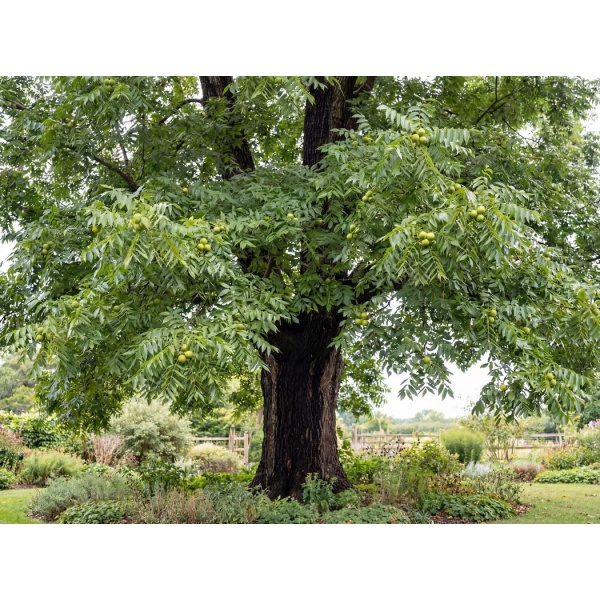
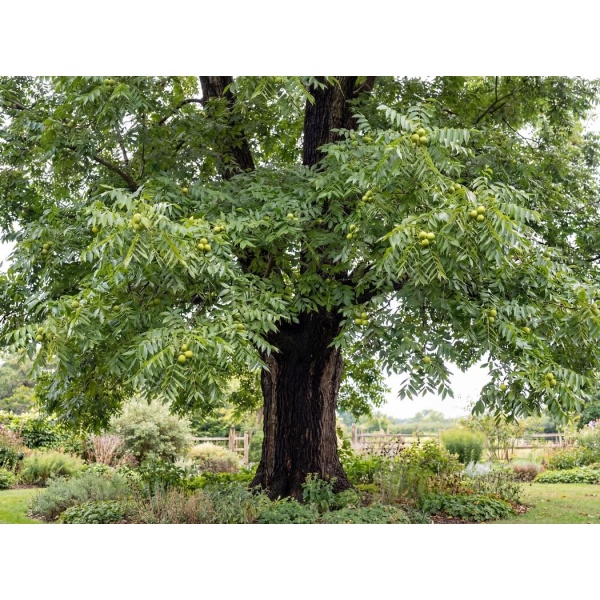
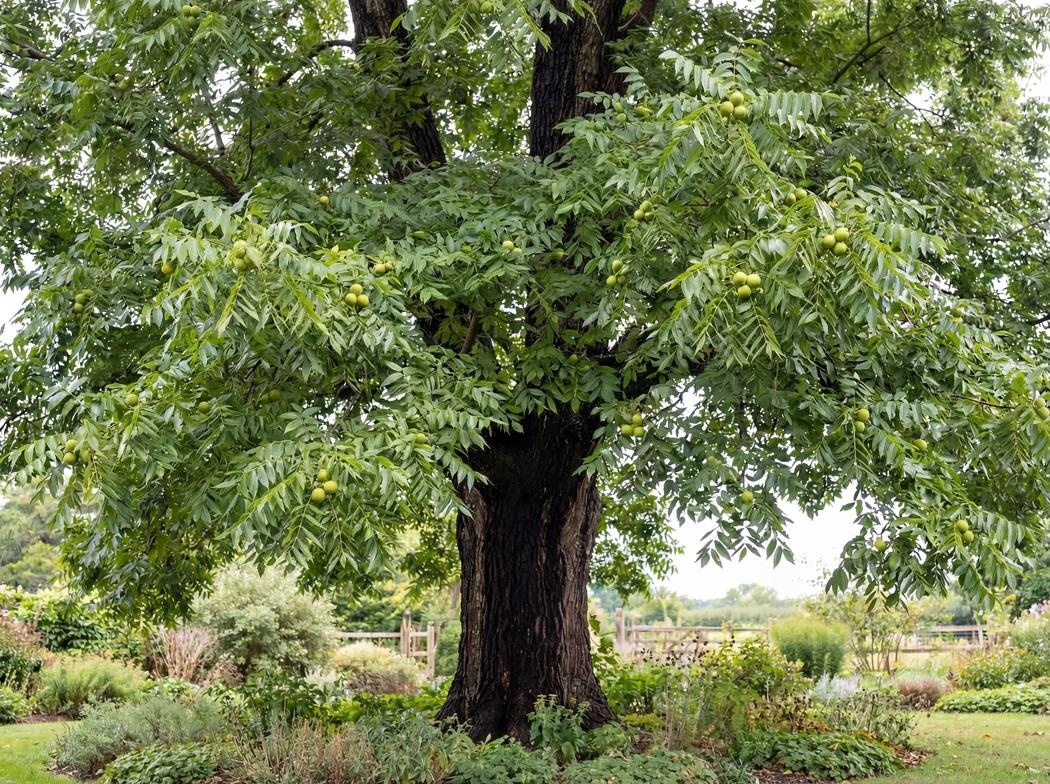
Juglans nigra grows into a broad native shade tree whose sweet, distinctive nuts ripen in fall, best reserved for a large sunny garden with room for its spreading crown.
- Description
- Additional information
Description
Juglans nigra grows into a broad, rounded shade tree for a large sunny property, carrying pinnate green leaves that turn yellow in fall. Sweet, distinctively flavored nuts ripen inside thick green husks in September and October, providing a home harvest once the shells are opened.
Plant in fertile, moist but well-drained soil where the mature crown has ample room. Its roots, leaves, buds, and hulls produce juglone, which can suppress sensitive nearby plants, so pair it with tolerant genera such as Hosta, Heuchera, and Astilbe. Do not use black walnut shavings around horses, and keep moldy fallen nuts and hulls away from dogs.
Additional information
| Height | 50 ft – 75 ft |
|---|---|
| Spread | 50 ft – 70 ft |
| Flowering months | April, May, June |
| Synonyms | Juglans nigra f. laciniata, Juglans nigra f. oblonga, Juglans nigra oblonga, Juglans pitteursii, Juglans rugosa, Wallia nigra |
| Family | Juglandaceae |
| Hazardous | yes |
| Variegated | unknown |
| Color flower spring | Green |
| Aspect | East, South, West |
| Foliage | Deciduous |
| Habit | Bushy |
| Moisture | Moist but Well Drained, Well Drained Soil |
| Ph | Acid, Alkaline, Neutral |
| Position | Full sun |
| Shape | Oval, Round, Spreading |
| Suggest planting location | Butterfly Garden, Woodland Garden, Low maintenance planting, Architectural planting, Edible fruit plants |
| Type | Tree |
| Use for | Architectural, Butterfly-Friendly, Edible |
| Years to max height | more than 50 |
| Drought resistance | moderate |
| Soil | Chalk, Clay, Loam, Sand |
| Harvest in | 9, 10 |
| Local names | Black Walnut, American Walnut |
| Blomidon Item No | 129913, 119923, 145393, 108431, JUGNI000015G, JUGNI000017G, JUGNI050WB, JUGNI060WB, 1005718, 201813796, 201813797 |
| Usps | Dark, furrowed bark supports a broad crown of yellow fall foliage., Sweet black walnuts provide an autumn harvest for home kitchens., Full sun and moist, well-drained soil support steady growth. |
| Propagation | Propagate by seed or grafting. |
| Pests | Watch for aphids, walnut blister mite, walnut caterpillars, and yellownecked caterpillars. |
| Diseases | Watch for anthracnose, thousand cankers disease, walnut leaf spot, walnut leaf blotch, honey fungus, and coral spot. |
| Pruning | Prune unwanted branches during the dormant season, avoiding spring cuts that bleed sap. |
| Hazardous information | Moldy nuts or hulls can cause tremors and seizures in dogs. Black walnut shavings can cause laminitis and colic in horses. |
| Watering instructions | Water young trees regularly; established trees tolerate some drought. |
| Sunlight instructions | Grow in full sun with an open southern, eastern, or western aspect. |
| Common Name | Black Walnut |