
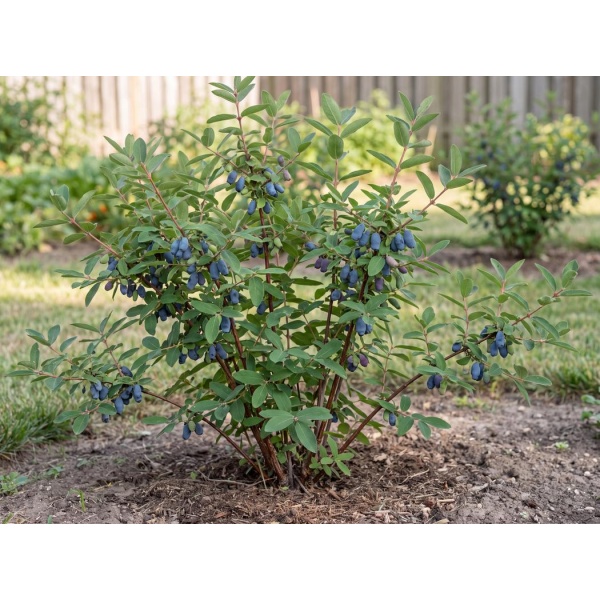
Lonicera caerulea edulis ‘Aurora”
$43.99
Lonicera caerulea Aurora is a cold-hardy, semi-upright fruit shrub with sweet, elongated blue-purple berries that ripen early.
- Description
- Additional information
Description
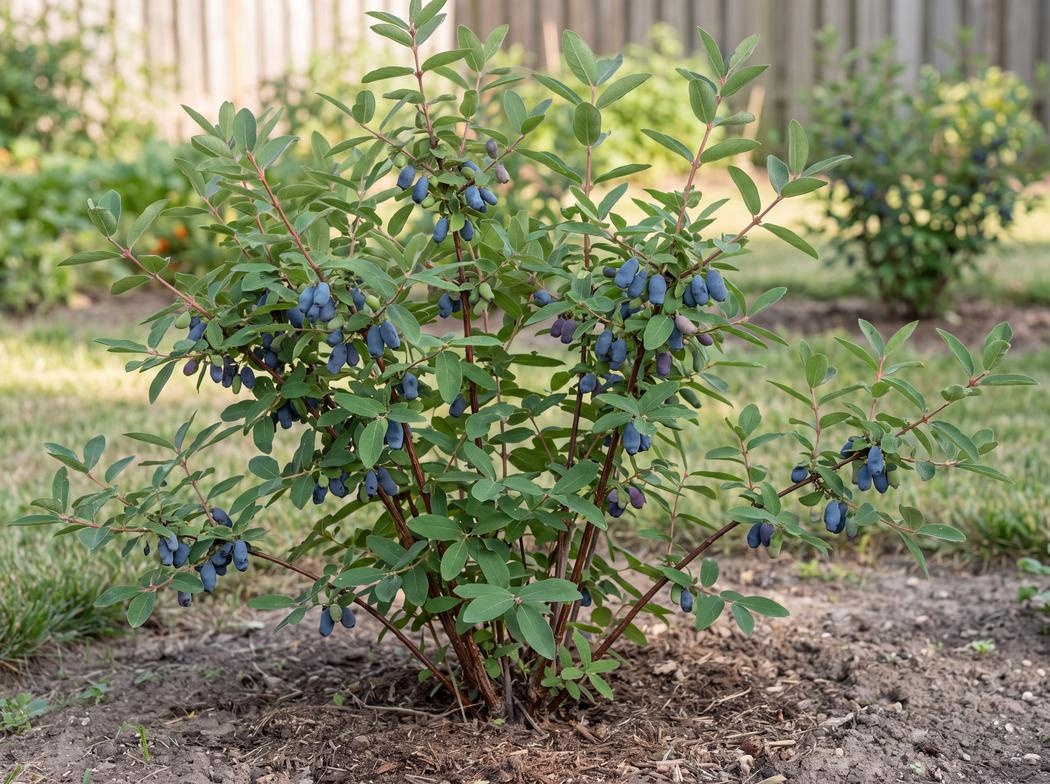
Aurora haskap, Lonicera caerulea Aurora, is a deciduous, semi-upright shrub developed at the University of Saskatchewan. Its medium-to-dark green leaves frame small yellow tubular flowers in spring, followed by narrow oblong fruit with blue-purple skin and a waxy bloom. University records describe the berries as large and sweet, while the official Canadian variety description distinguishes their elongated form and rough surface.
Plant Aurora in full sun for the best crop, in well-drained loam, sandy loam, or well-drained clay. It is self-incompatible, so place a genetically compatible cultivar that blooms at the same time nearby; Honey Bee is the preferred early-season companion, while Borealis, Tundra, and Indigo selections are also documented matches. Keep young shrubs moist but not waterlogged, mulch their shallow root area, and protect the ripening fruit from birds when needed.
Additional information
| Height | 5 ft – 7 ft |
|---|---|
| Spread | 4 ft – 5 ft |
| Synonyms | Lonicera Aurora, Lonicera caerulea Aurora, Lonicera caerulea edulis 'Aurora", Lonicera caerulea var. kamtschatica 'Aurora' |
| Family | Caprifoliaceae |
| Hazardous | unknown |
| Variegated | no |
| Color flower spring | White, Yellow |
| Aspect | East, South, West |
| Habit | Bushy |
| Ph | Acid, Neutral |
| Shape | Upright |
| Suggest planting location | Pollinator Garden, Edible fruit plants, Cottage and informal gardens, Wildlife friendly gardens |
| Type | Shrub |
| Use for | Bee-Friendly, Butterfly-Friendly, Pollinator-Friendly, Edible |
| Harvest in | 6, 7, 8 |
| Local names | Aurora honeyberry |
| Blomidon Item No | 119860, 112749, 113877, LONCAEAU0001G, LONCAEAU0002G, 202058382 |
| Usps | Large, sweet, low-acid blue berries, Productive, open semi-upright habit |
| Flowering months | May |
| Propagation | Propagate the cultivar vegetatively from semi-hardwood or hardwood cuttings. |
| Pests | Birds may take the fruit; honeysuckle aphids, thrips, and greenhouse whiteflies may occur. |
| Diseases | Aurora has high mildew resistance, although powdery mildew can still occur in honeyberry plantings. |
| Pruning | After establishment, remove weak growth and up to one-fifth of older stems in early to midsummer. |
| Watering instructions | Water young plants until established; thereafter, irrigate only as needed. |
| Sunlight instructions | Use full sun for best fruiting; light partial sun reduces the crop. |
| Foliage | Deciduous |
| Moisture | Moist but Well Drained, Well Drained Soil |
| Position | Full sun, Partial shade |
| Years to max height | 5 |
| Drought resistance | no |
| Soil | Chalk, Clay, Loam, Sand |
| Common Name | Aurora Honeyberry |