
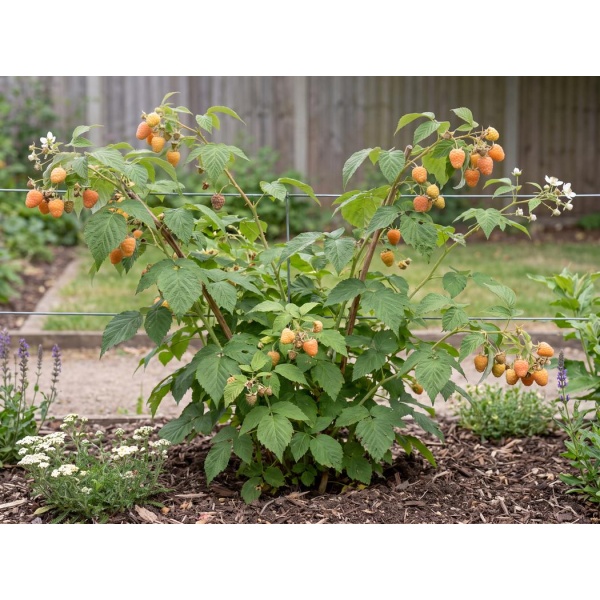
Rubus idaeus ‘Fall Gold’ (Raspberry)
$21.99
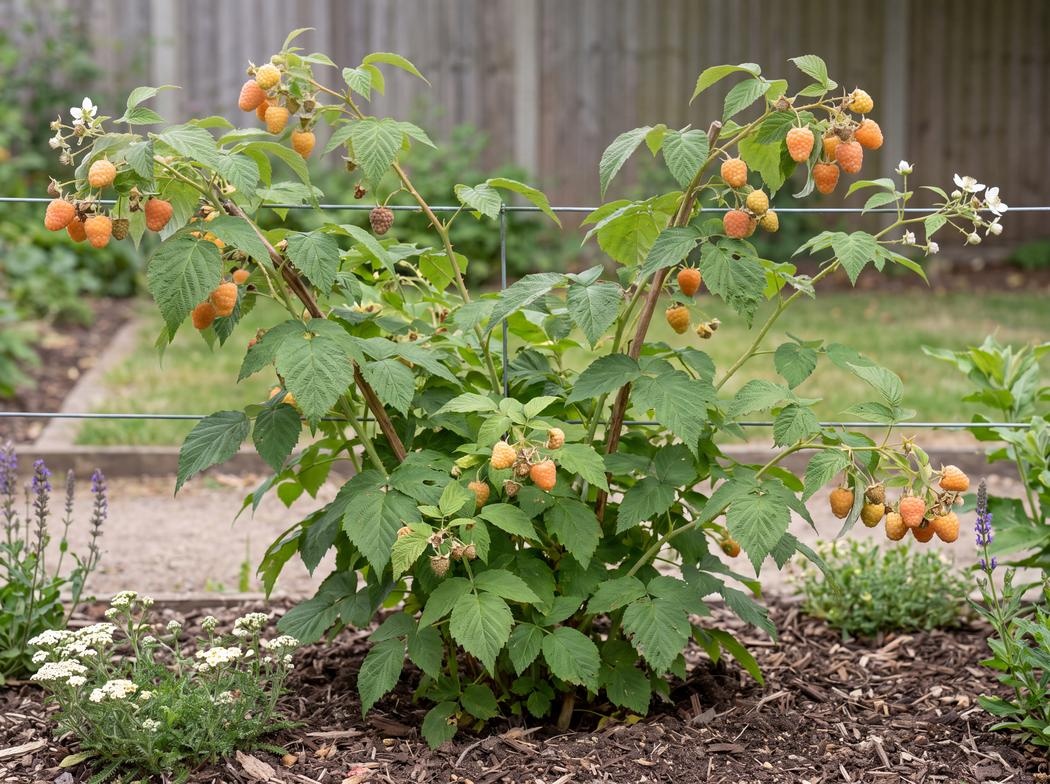
Fall Gold raspberry bears sweet golden-yellow fruit on vigorous, upright, suckering canes, with a fall crop and a smaller spring crop when overwintered canes are retained.
- Description
- Additional information
Description
Sweet golden-yellow fruit makes Rubus idaeus Fall Gold an appealing everbearing raspberry for edible gardens and borders. Vigorous upright canes spread by suckers, carrying small white flowers followed by soft yellow fruit that can develop a pink blush. New primocanes bear the main late-summer-to-fall crop, while retained canes can provide a smaller crop the following spring.
Grow it in full sun or partial shade in fertile, mildly acidic, moist but well-drained soil. Train the thorny canes to wires and water steadily during establishment and fruit development. Remove spent canes after harvest for two crops, or cut all canes to ground level in late winter for one fall crop.
Additional information
| Height | 120 cm – 150 cm |
|---|---|
| Spread | 60 cm – 90 cm |
| Flowering months | April, May, June, July, August, September, October |
| Synonyms | Rubus Fallgold, Rubus idaeus 'Fall Gold', Rubus idaeus 'Fall Gold' (Raspberry), Rubus idaeus 'Fallgold', Rubus idaeus Fallgold, Rubus idaeus var. strigosus Fall Gold |
| Family | Rosaceae |
| Propagation | Separate rooted suckers from the parent clump and replant them promptly. |
| Pests | Watch for spotted wing drosophila and Japanese beetles. |
| Diseases | Watch for gray mold, cane blights, Phytophthora root rot, and powdery mildew. |
| Pruning | For two crops, remove spent floricanes after harvest and cut dead tips from overwintered primocanes. For one fall crop, cut all canes to ground level in late winter. |
| Hazardous information | Thorny canes can scratch skin; wear gloves when pruning, tying, or harvesting. |
| Hazardous | yes |
| Variegated | unknown |
| Watering instructions | Keep the soil evenly moist but well drained, especially during establishment and fruit development. |
| Sunlight instructions | Grow in full sun for the best yield; partial shade is tolerated but may reduce fruit quality. |
| Color flower autumn | White |
| Color flower spring | White |
| Color flower summer | White |
| Aspect | East, South, West, North |
| Foliage | Deciduous |
| Habit | Columnar upright, Clump-former, Suckering |
| Moisture | Moist but Well Drained |
| Ph | Acid, Neutral |
| Position | Full sun, Partial shade |
| Shape | Upright |
| Suggest planting location | Wall and boundary borders, Flowering borders, Edible fruit plants, Wildlife friendly gardens |
| Type | Fruit |
| Use for | Bird-Friendly, Pollinator-Friendly, Edible |
| Years to max height | 2 |
| Cultivation | Train canes to wires in fertile, mildly acidic, moist but well-drained soil. Remove spent floricanes after harvest; for one fall crop, cut all canes to ground level in late winter. |
| Soil | Clay, Loam, Sand |
| Local names | Fall Gold Raspberry, Fallgold Raspberry |
| Blomidon Item No | MO23014465, VN-338-230-01 |
| Usps | Produces sweet golden-yellow raspberries on first-year canes., Can provide a fall crop and a second spring crop on retained canes. |