
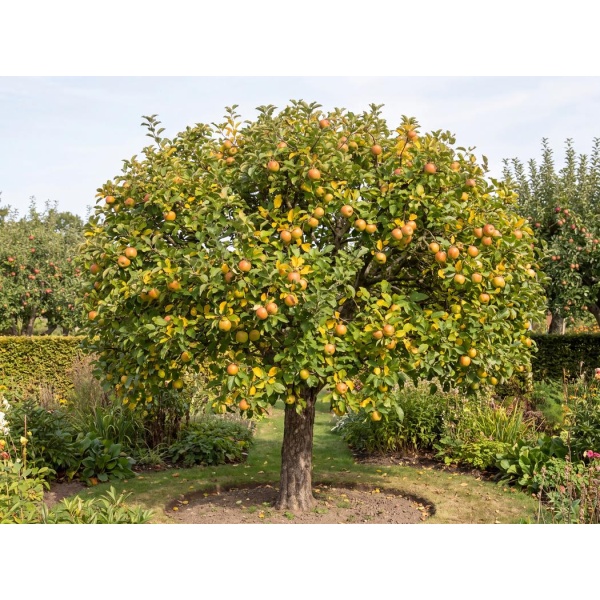
Malus ‘Cox’s Orange Pippin’

$174.99
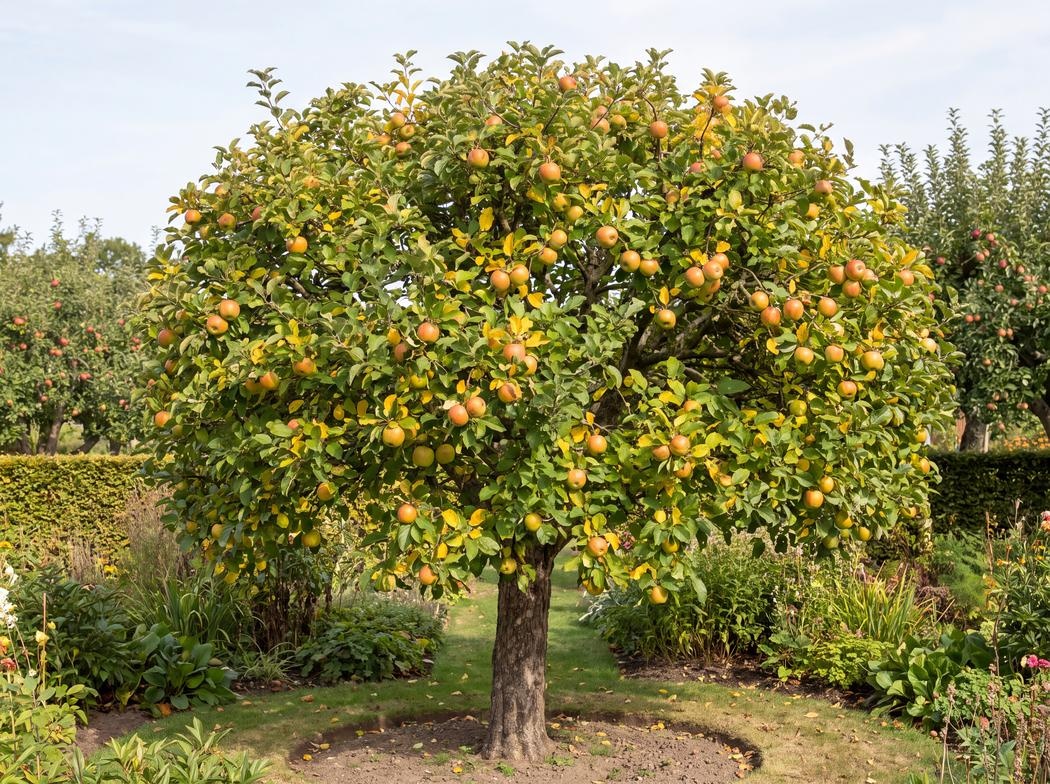
Malus domestica Coxs Orange Pippin bears richly flavored, orange-red striped apples for fresh eating, baking, preserves, and sauce.
- Description
- Additional information
Description
Malus domestica Coxs Orange Pippin produces medium dessert apples with greenish-yellow skin, red stripes, and an orange flush. The crisp, juicy flesh has a rich aromatic flavor and suits fresh eating, baking, preserves, sauce, and cider.
Grow it in full sun on moist but well-drained soil in a sheltered position. Depending on rootstock and training, the tree reaches about 13 to 26 feet tall and wide, and regular pruning is required.
Fragrant pink-white flowers open in spring and provide forage for bees. For a good crop, grow a compatible apple from the same or an adjacent flowering group nearby. The fruit ripens from mid-September to mid-October.
The edible flesh is distinct from the seeds, which contain amygdalin; discard the core and do not chew the seeds.
Additional information
| Height | 13 ft – 26 ft |
|---|---|
| Spread | 13 ft – 26 ft |
| Flowering months | April, May |
| Synonyms | Malus 'Cox's Orange Pippin', Malus Coxs Orange Pippin, Malus domestica Cox Orange, Malus domestica Cox Orange Pippin |
| Family | Rosaceae |
| Hazardous | yes |
| Variegated | unknown |
| Color flower spring | White, Pink |
| Aspect | South, West |
| Foliage | Deciduous |
| Habit | Bushy |
| Moisture | Moist but Well Drained, Well Drained Soil |
| Ph | Neutral |
| Position | Full sun |
| Scent | Fragrant |
| Shape | Round |
| Suggest planting location | Edible fruit plants, Cottage and informal gardens, Wildlife friendly gardens |
| Type | Fruit |
| Use for | Bee-Friendly, Bird-Friendly, Edible |
| Years to max height | 5 |
| Cultivation | Plant in full sun on moist but well-drained clay, loam, or sand. Choose a sheltered spot and maintain a clear circle around the trunk. Thin fruit when crops are heavy. |
| Soil | Clay, Loam, Sand |
| Harvest in | 9, 10 |
| Local names | Cox's Orange Pippin Apple |
| Usps | Orange-red striped apples have crisp, richly aromatic flesh., Fruit suits fresh eating, baking, preserves, sauce, and cider., Full sun and moist, well-drained soil support the best crop. |
| Propagation | Propagate by chip budding or grafting onto a clonal fruit-tree rootstock. |
| Pests | Watch for aphids, red spider mites, codling moths, and other caterpillars. |
| Diseases | Susceptible to apple canker, apple scab, blossom wilt, brown rot, fire blight, honey fungus, and powdery mildew. |
| Pruning | Remove dead or obstructive branches at the end of winter. |
| Hazardous information | Apple seeds contain amygdalin and should not be chewed or eaten in quantity; discard the core. |
| Watering instructions | Water generously after planting. |
| Sunlight instructions | Plant in full sun with a sheltered south- or west-facing aspect. |
| Common Name | Cox's Orange Pippin Apple |