
Picea glauca var. densata
$153.99
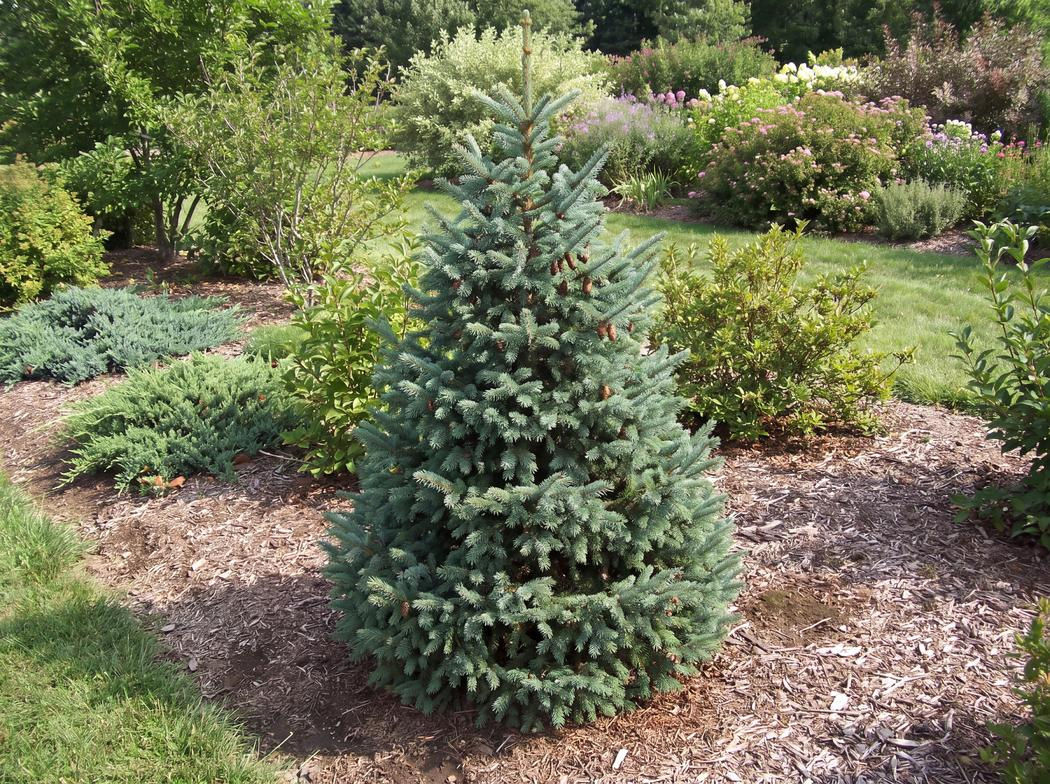
A spire-like evergreen, tall and stately with bluish-green needles, more densely branched and fuller than the species; very tough and adaptable, makes a wonderful vertical accent for the larger home landscape, ideal as a windbreak or in a shelterbelt
- Description
- Additional information
Description
A spire-like evergreen, tall and stately with bluish-green needles, more densely branched and fuller than the species; very tough and adaptable, makes a wonderful vertical accent for the larger home landscape, ideal as a windbreak or in a shelterbelt
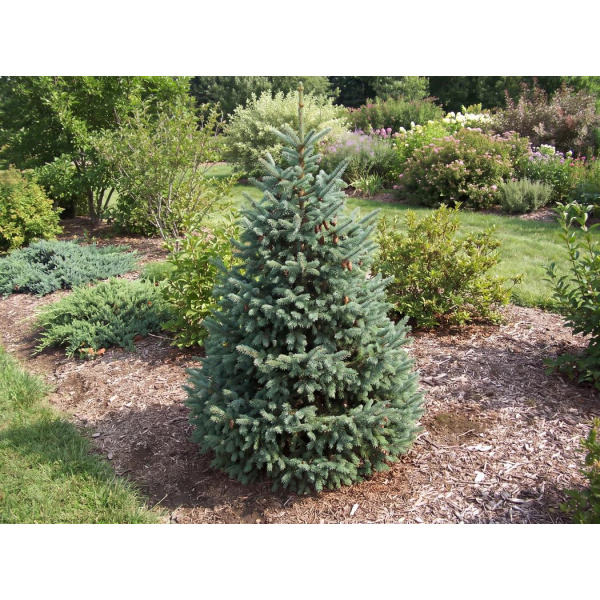
Black Hills Spruce is a dense evergreen tree with a strong central leader and a distinctive and refined pyramidal form. Its relatively fine texture sets it apart from other landscape plants with less refined foliage.
This is a relatively low maintenance tree. When pruning is necessary, it is recommended to only trim back the new growth of the current season, other than to remove any dieback. It has no significant negative characteristics.
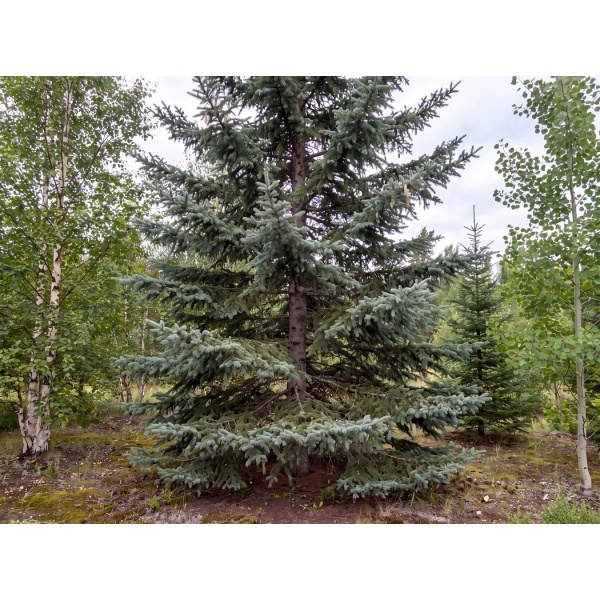
Black Hills Spruce is primarily valued in the landscape for its distinctively pyramidal habit of growth. It has bluish-green evergreen foliage which emerges light green in spring. The needles remain bluish-green throughout the winter. The smooth gray bark adds an interesting dimension to the landscape.
Black Hills Spruce will grow to be about 40 feet tall at maturity, with a spread of 15 feet. It has a low canopy, and should not be planted underneath power lines. It grows at a slow rate, and under ideal conditions can be expected to live for 90 years or more.
This tree should only be grown in full sunlight. It is very adaptable to both dry and moist locations, and should do just fine under average home landscape conditions. It is considered to be drought-tolerant, and thus makes an ideal choice for xeriscaping or the moisture-conserving landscape. It is not particular as to soil type or pH, and is able to handle environmental salt. It is highly tolerant of urban pollution and will even thrive in inner city environments. This species is native to parts of North America.
Additional information
| Height | 610 cm – 1220 cm |
|---|---|
| Spread | 305 cm – 455 cm |
| Synonyms | Picea × albertiana, Picea glauca 'Densata', Picea glauca var. densata |
| Family | Pinaceae |
| Hazardous | unknown |
| Variegated | no |
| Aspect | East, South, West |
| Foliage | Evergreen |
| Habit | Columnar upright, Compact |
| Moisture | Moist but Well Drained, Well Drained Soil |
| Ph | Acid, Alkaline, Neutral |
| Position | Full sun, Light shade |
| Shape | Cone, Pyramidal |
| Suggest planting location | Four-Season Garden, Low maintenance planting, Architectural planting, Hedges and screening plants, Wildlife friendly gardens |
| Type | Conifer |
| Use for | Architectural, Screen, Windbreak |
| Years to max height | 20 |
| Drought resistance | moderate |
| Cultivation | |
| Soil | Clay, Gravelly soil, Loam, Sand |
| Local names | Black Hills spruce |
| Blomidon Item No | 118899, 144562, 119930, 109682, 111690, PICGLD0607CP, PICGLDE005G, PICGLDE0150WB, PICGLDE0175WB |
| Usps | A naturally dense, symmetrical crown needs little formative pruning., Blue-green evergreen needles give year-round structure and cover., Sun and moist, well-drained soil encourage the densest crown. |