
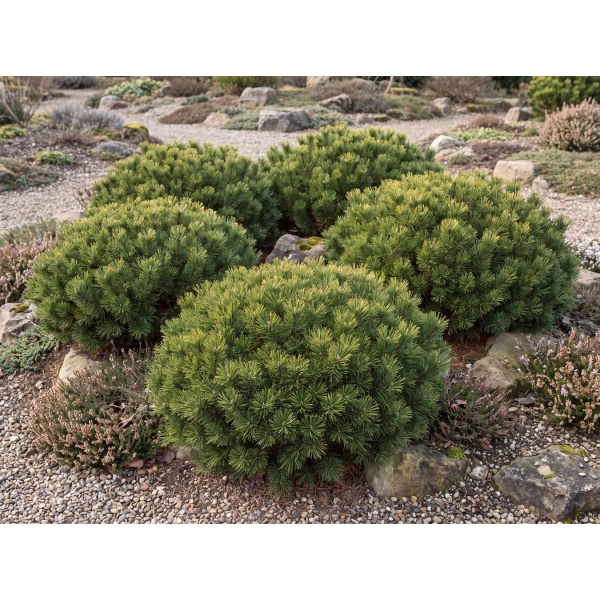
Pinus mugo “Sherwood Compacta”
$219.99
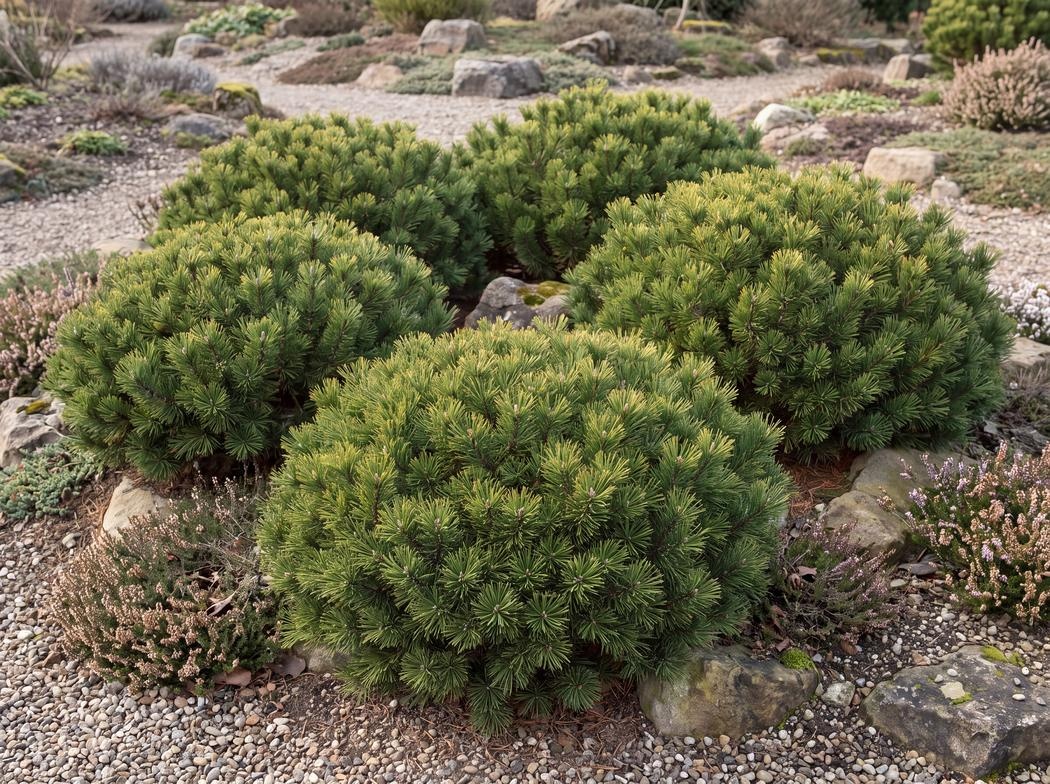
Pinus mugo Sherwood Compact forms a dense, slow-growing mound with dark green needles, golden winter tips, and an easy fit for rock gardens or patio containers.
- Description
- Additional information
Description
Pinus mugo Sherwood Compact forms a dense, slow-growing mound of dark green needles, with golden tips adding definition in winter. Its compact scale fits rock gardens and patio containers where year-round form matters.
Plant it in full sun or partial shade and well-drained soil. Water regularly while it establishes; once settled, it tolerates dry conditions and needs little routine pruning.
Additional information
| Height | 5 in – 2 ft |
|---|---|
| Spread | 5 in – 2 ft |
| Flowering months | March, April |
| Synonyms | Pinus mugo 'Sherwood Compact', Pinus mugo "Sherwood Compacta", Pinus mugo Teeny |
| Family | Pinaceae |
| Hazardous | unknown |
| Variegated | unknown |
| Aspect | East, South, West, North |
| Foliage | Evergreen |
| Habit | Bushy, Compact, Tufted |
| Moisture | Moist but Well Drained, Well Drained Soil |
| Ph | Acid, Alkaline, Neutral |
| Position | Full sun, Partial shade |
| Shape | Round, Mound-forming, Spreading |
| Suggest planting location | Architectural planting, Patio and container use, Cottage and informal gardens, Gravel and stone gardens |
| Type | Conifer |
| Use for | Architectural, Low maintenance, Container Planting |
| Years to max height | 10 |
| Drought resistance | yes |
| Soil | Chalk, Clay, Loam, Sand |
| Local names | Sherwood Compact Mugo Pine, Mugho Pine, Mugo Pine, Swiss Mountain Pine |
| Blomidon Item No | 134881, MO23048597, PINMUSC0003G, 202026536, 202071405, 201996625, 202016606, 202066332, 202016904, 202073186, 202073187 |
| Usps | Dense green needles gain golden tips in winter., Its compact mound fits rock gardens and patio containers., Give full sun or partial shade with well-drained soil. |
| Propagation | Propagate this cultivar by grafting. |
| Pests | Watch for adelgids, conifer aphids, pine shoot moths, and pine sawflies. |
| Diseases | Honey fungus and needle cast diseases may occur. |
| Pruning | No routine pruning is needed; if shaping is necessary, shorten new candles in spring. |
| Watering instructions | Water well while establishing, then during prolonged dry spells. |
| Sunlight instructions | Grow in full sun or partial shade. |