
Larix decidua ‘Puli’
$439.99
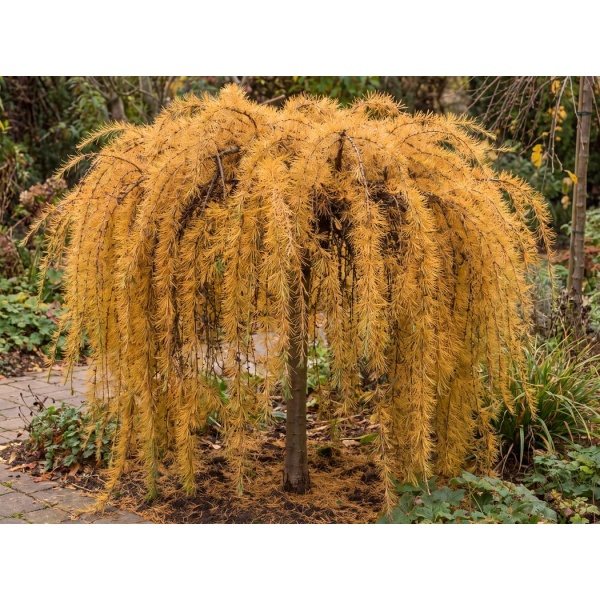
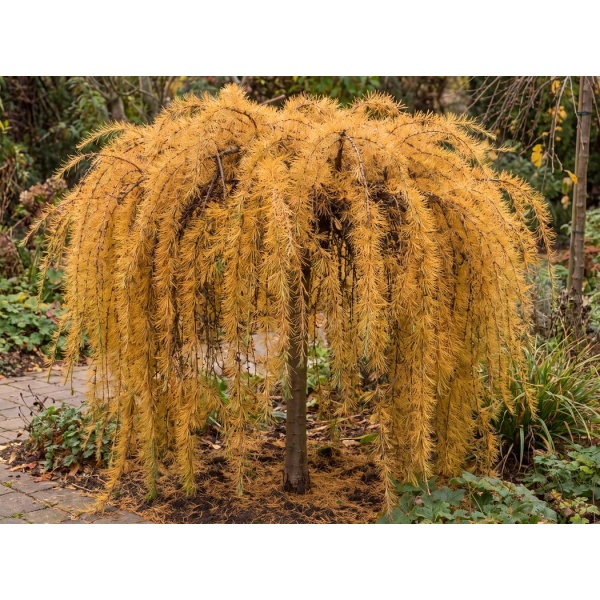
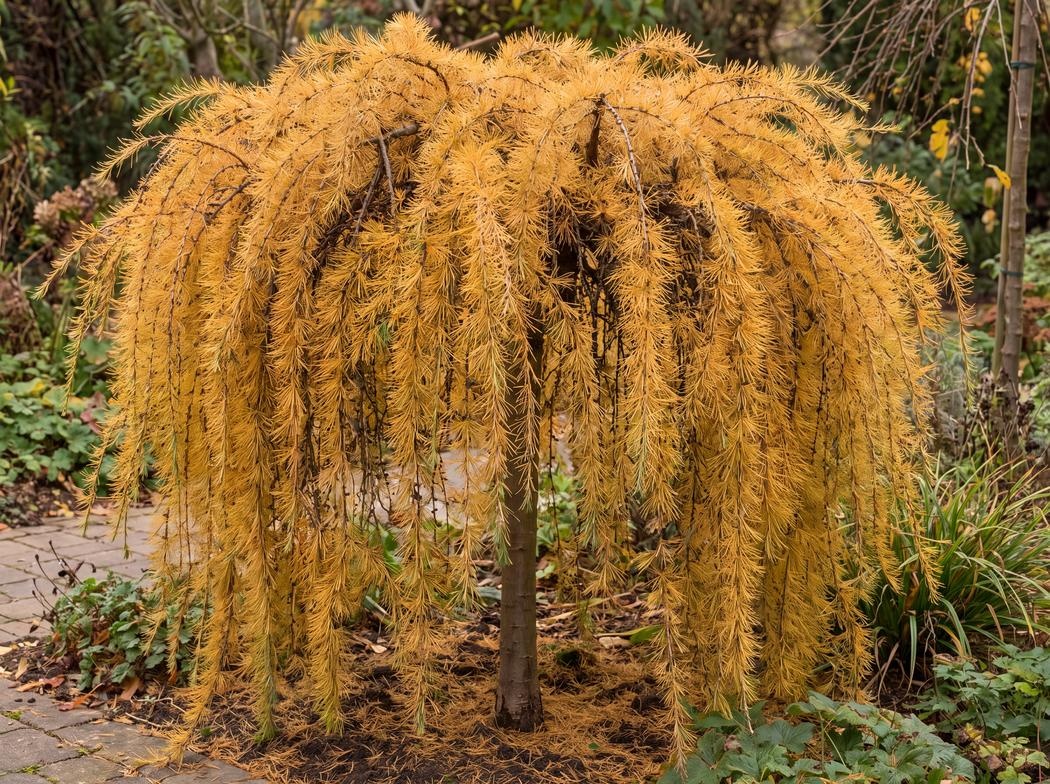
Larix decidua Puli forms dense, strongly weeping curtains of light green needles that turn golden yellow in autumn, whether trained upright or left to spread as ground cover.
- Description
- Additional information
Description
Strongly weeping branches give Larix decidua Puli a narrow, cascading outline. The light green needles turn golden yellow in autumn, then fall to reveal the fine branch structure.
Stake a leader to establish height, or leave the plant unstaked so it spreads as ground cover. Grow it in full sun in deep, moist but well-drained acid or neutral soil.
Additional information
| Height | 8 ft – 13 ft |
|---|---|
| Spread | 3 ft – 5 ft |
| Flowering months | April |
| Synonyms | Larix decidua 'Puli' |
| Family | Pinaceae |
| Hazardous | unknown |
| Variegated | unknown |
| Color flower spring | Brown, Yellow |
| Aspect | South, West |
| Foliage | Deciduous |
| Habit | Mat-former, Pendulous |
| Moisture | Moist but Well Drained |
| Ph | Acid, Neutral |
| Position | Full sun |
| Shape | Weeping |
| Suggest planting location | Banks and slopes, Urban and courtyard gardens, Architectural planting, Cottage and informal gardens, Ground cover planting |
| Type | Conifer |
| Use for | Architectural, Ground cover, Container Planting |
| Years to max height | 20 |
| Cultivation | Grow this weeping larch in full sun and moist, well-drained soil. Stake a leader to set height, or let the branches form ground cover. |
| Soil | Clay, Loam, Sand |
| Local names | Puli Weeping European Larch, Weeping European Larch, European Larch, Common Larch |
| Blomidon Item No | LARDEPU00003G, LARDEPU00010G, 201824009, 202027333 |
| Usps | Light green needles turn golden yellow in autumn., Unstaked branches spread into practical ground cover., Full sun and moist, well-drained soil support its best growth. |
| Propagation | Propagate by grafting or semi-ripe cuttings. |
| Pests | Watch for adelgids, larch casebearer, aphids, larch sawfly, and Japanese beetles. |
| Diseases | Honey fungus, needle cast, rust, and canker may occur. |
| Pruning | Shorten new shoots by up to one-third from late June through early September. |
| Watering instructions | Keep the soil moist but well drained, especially in dry weather. |
| Sunlight instructions | Plant in full sun with a south- or west-facing aspect. |