
Thuja occidentalis Fire Chief
$87.99
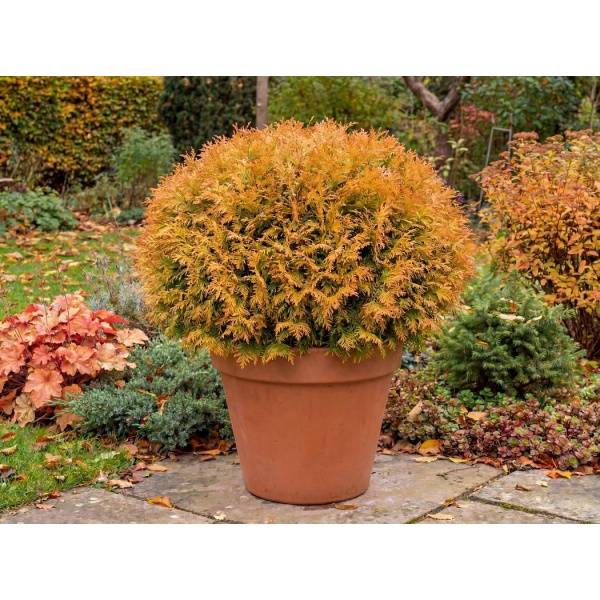
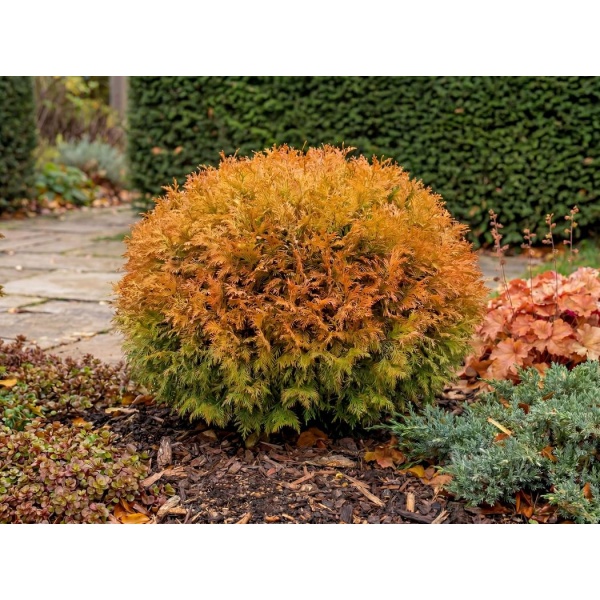
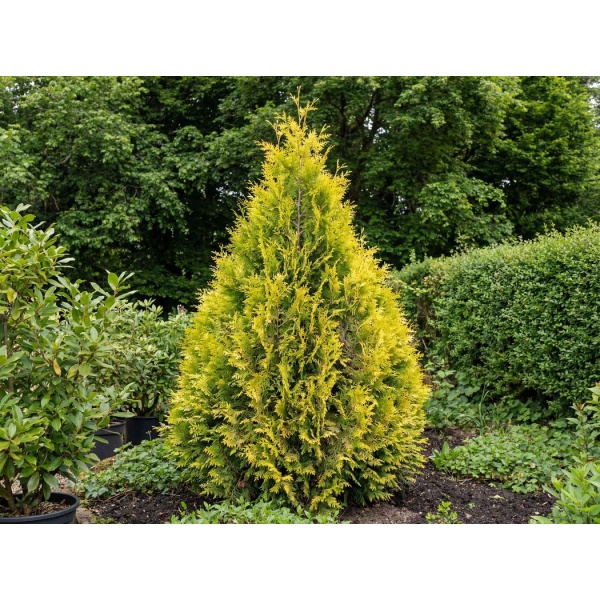
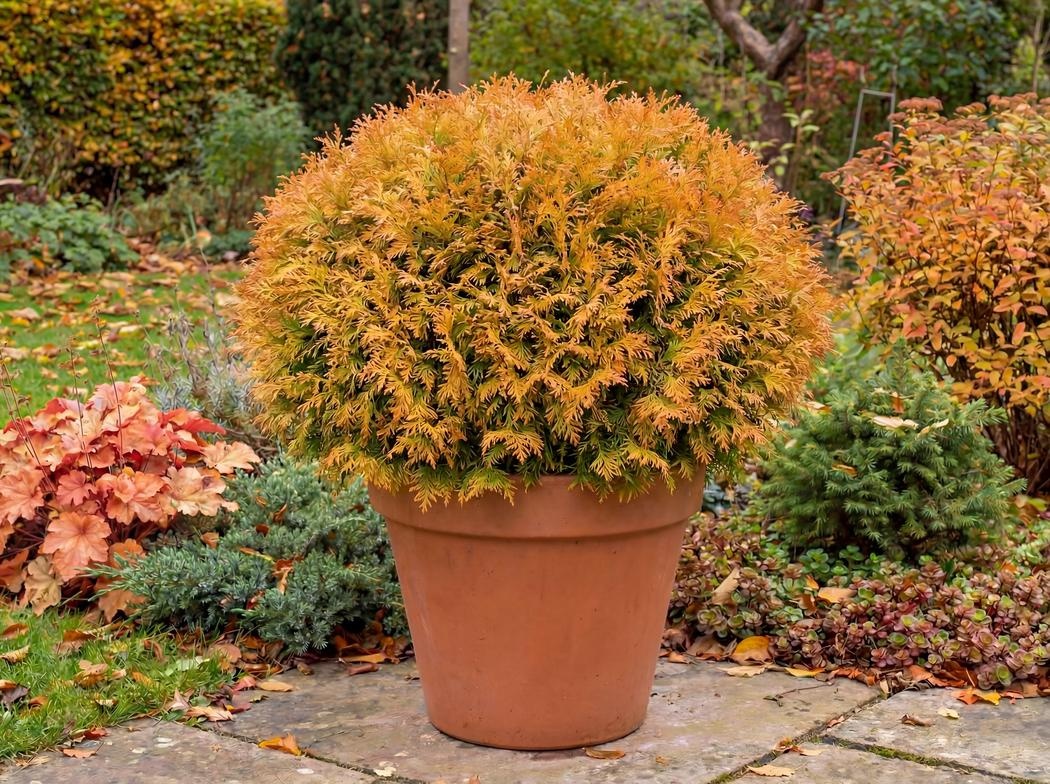
Thuja occidentalis Fire Chief forms a compact round evergreen with golden spring foliage and red fall color for containers, low hedges, and small borders.
- Description
- Additional information
Description
Thuja occidentalis Fire Chief forms a compact, rounded evergreen with bright gold spring foliage, sage-green summer foliage, and red fall and winter color. Its naturally tidy shape suits containers, low hedges, foundation plantings, and small borders without regular pruning.
Grow it in full sun or light shade in moist but well-drained, slightly acidic soil. Water consistently during establishment, then deeply during dry periods. The plant is harmful if eaten and may cause skin allergy; it is also toxic to pets if ingested.
Additional information
| Height | 5 ft – 5 ft |
|---|---|
| Spread | 3 ft – 3 ft |
| Synonyms | Thuja occidentalis Congabe, Thuja occidentalis Congabe (Fire Chief), Thuja occidentalis Congabe Fire Chief, Thuja occidentalis Fire Chief ('Congabe'), Thuja occidentalis Fire Chief (Congabe) |
| Family | Cupressaceae |
| Hazardous | yes |
| Variegated | unknown |
| Aspect | East, South, West |
| Foliage | Evergreen |
| Habit | Compact |
| Moisture | Moist but Well Drained |
| Ph | Acid |
| Position | Full sun, Light shade |
| Shape | Round |
| Suggest planting location | Patio and container use, Garden edging and borders, Rock and alpine gardens |
| Type | Conifer |
| Use for | Hedge, Foundation Planting, Container Planting |
| Years to max height | 5 |
| Drought resistance | yes |
| Soil | Loam |
| Local names | American Arborvitae, Eastern Arborvitae, Northern White Cedar |
| Blomidon Item No | MO23075356, THUOCFC0002G, 201634824, 201823143, 201681637 |
| Usps | Golden spring foliage turns sage green, then red in fall and winter., Its compact round form needs no regular pruning., Grow in full sun or light shade with moist, well-drained soil. |
| Propagation | Take semi-ripe cuttings in late summer and root them in moist, well-drained medium. |
| Pests | Spider mites may occur in hot, dry weather. |
| Pruning | No pruning is required to maintain the rounded shape; remove damaged branches in early spring. |
| Hazardous information | The plant is harmful if eaten and can cause skin allergy in people. This conifer is also toxic to pets if ingested. |
| Watering instructions | Keep soil moist but well drained, especially during establishment. |
| Sunlight instructions | Grow in full sun or light shade for the strongest foliage color. |