
Thuja occidentalis Brabant
$72.99
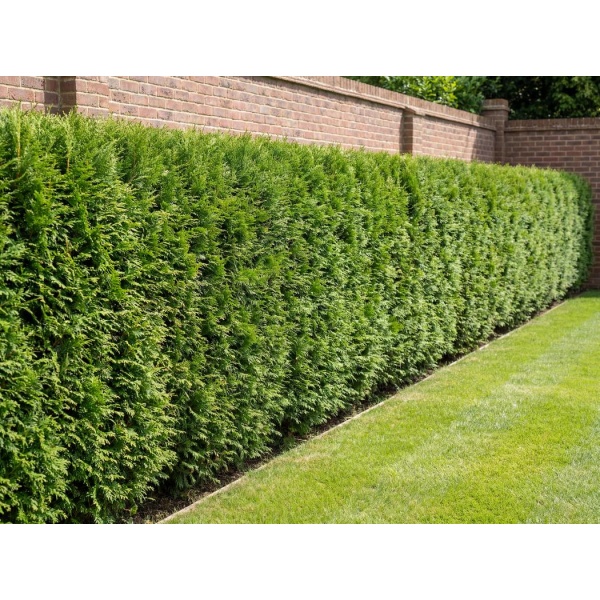
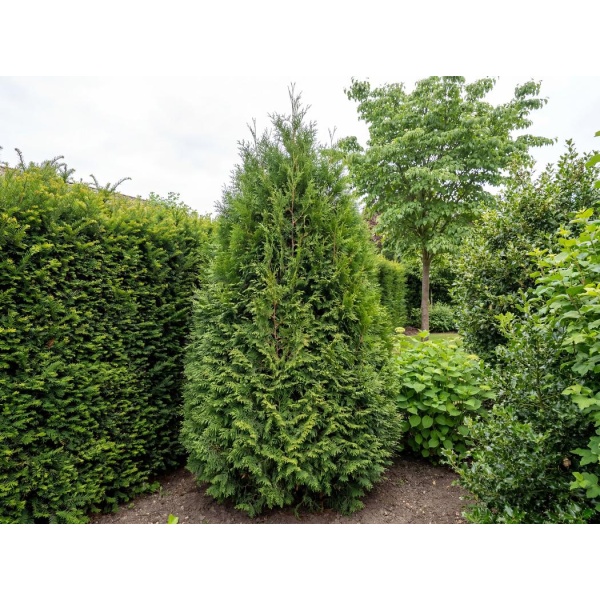
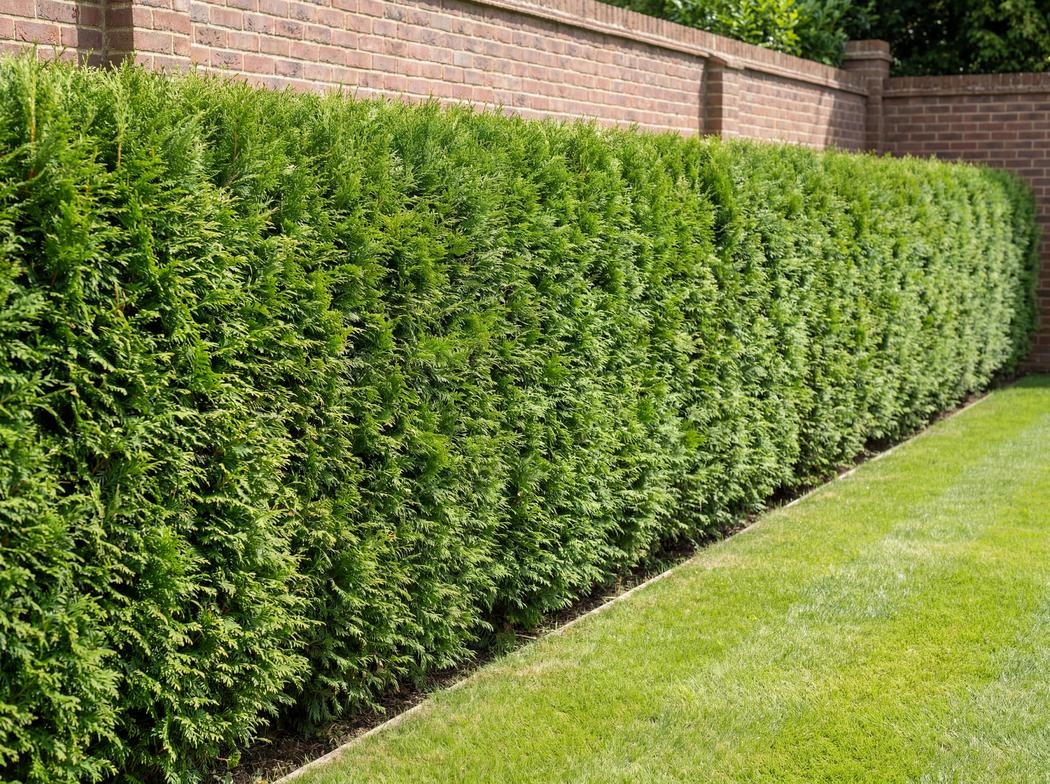
Thuja occidentalis Brabant is a fast-growing, dense evergreen conifer with yellow-green foliage and a narrow pyramidal form suited to hedges and privacy screens.
- Description
- Additional information
Description
Thuja occidentalis Brabant is a fast-growing evergreen conifer with dense branching, a narrow pyramidal outline, and yellow-green foliage that holds its color through winter. It can be grown as an architectural specimen or clipped into a substantial hedge.
Plant in full sun or partial shade in fertile, moist but well-drained soil. Water young plants regularly, mulch the root zone, and avoid waterlogged conditions.
Prune to maintain the desired outline. Its dense growth creates year-round privacy and wind protection, while the reddish-brown peeling bark and small light-brown cones add quiet detail.
Additional information
| Height | 13 ft – 26 ft |
|---|---|
| Spread | 8 ft – 13 ft |
| Flowering months | March, April |
| Synonyms | Thuja Brabant, Thuja occidentalis 'Brabant', Thuja plicata Brabant |
| Family | Cupressaceae |
| Hazardous | yes |
| Variegated | unknown |
| Aspect | East, South, West, North |
| Foliage | Evergreen |
| Habit | Columnar upright |
| Moisture | Moist but Well Drained |
| Ph | Neutral |
| Position | Full sun, Partial shade |
| Scent | Fragrant |
| Shape | Cone, Pyramidal |
| Suggest planting location | Low maintenance planting, Urban and courtyard gardens, Architectural planting, Hedges and screening plants, Cottage and informal gardens |
| Type | Conifer |
| Use for | Architectural, Hedge, Screen |
| Years to max height | 5 |
| Drought resistance | yes |
| Soil | Chalk, Clay, Loam, Sand |
| Local names | Brabant arborvitae, American arborvitae, Eastern white cedar |
| Cultivation | Grow in full sun or partial shade in fertile, moist but well-drained soil; water during dry periods and avoid waterlogging. |
| Propagation | Propagate by semi-hardwood cuttings to preserve the named cultivar. |
| Pests | May be susceptible to scale insects and cypress aphid. |
| Diseases | May be susceptible to honey fungus, thuja blight, Coryneum canker, and other fungal diseases. |
| Pruning | Prune as needed to maintain the desired hedge or pyramidal shape, avoiding heavy cuts into bare wood. |
| Hazardous information | Harmful if eaten and may cause a skin reaction; wear gloves when handling. |
| Watering instructions | Water regularly during establishment and dry periods, keeping the soil moist but well drained and never waterlogged. |
| Sunlight instructions | Grow in full sun or partial shade; full sun encourages the densest hedge growth. |
| Common Name | Brabant Arborvitae |