
Malus ‘Red Jade’

$129.99
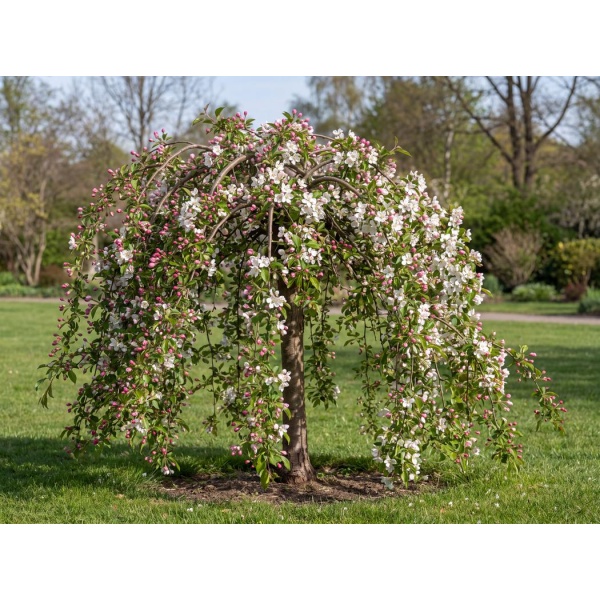
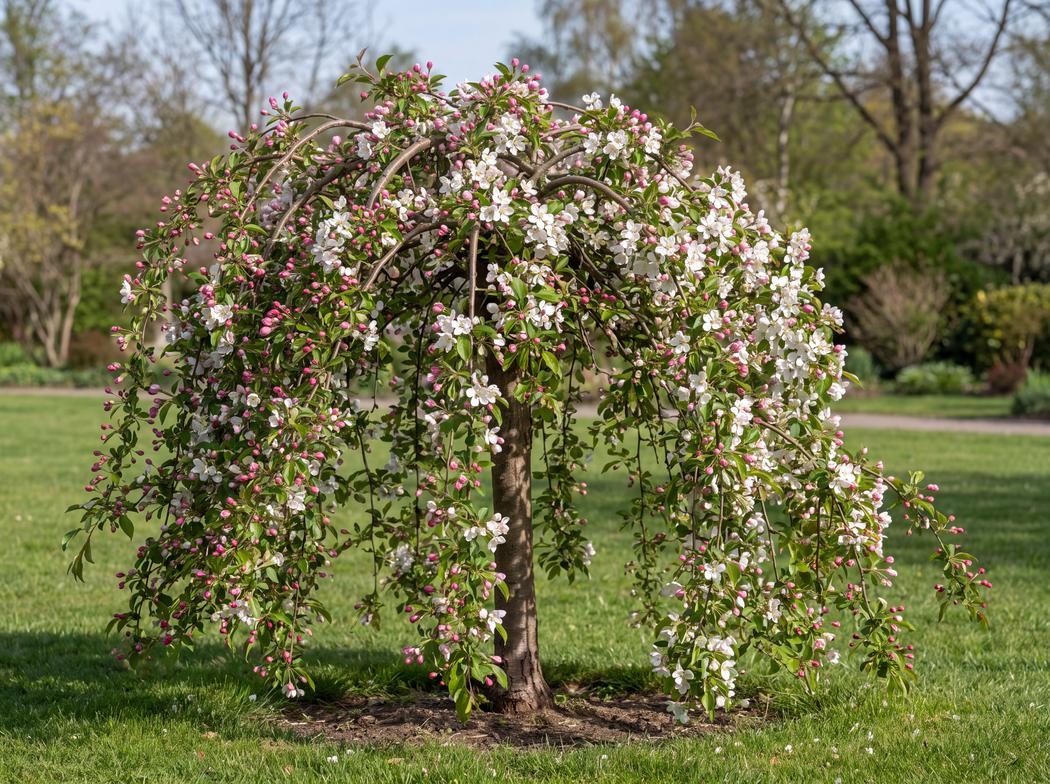
Malus × scheideckeri Red Jade forms a graceful weeping tree with deep pink buds, single white spring flowers, glossy green leaves, and small red crabapples that can persist into winter.
- Description
- Additional information
Description
Long, slender branches cascade from the broad crown of Malus × scheideckeri Red Jade, creating a graceful specimen tree for a lawn edge, courtyard, or mixed border. Deep pink buds open to fragrant single white flowers in late spring. Glossy tapered leaves follow, and small bright red crabapples provide autumn color and may remain after the leaves fall.
Grow this deciduous tree in full sun or partial shade in moderately fertile, moist but well-drained soil. It accepts acid, neutral, or alkaline conditions and a range of soil textures. Leave enough room for the mature weeping crown to spread, and avoid excessive fertilizer that can encourage weak, disease-prone growth.
Remove dead, diseased, or crossing branches and cut basal suckers close to the ground, disinfecting tools between cuts. The small fruit can be cooked for jelly after the seeds are removed. The seeds contain toxins and should not be eaten.
Additional information
| Height | 250 cm – 400 cm |
|---|---|
| Spread | 250 cm – 400 cm |
| Flowering months | May, June |
| Synonyms | Malus 'Red Jade', Malus Red Jade, Malus Scheideckeri Red Jade, Malus Weeping Red Jade |
| Family | Rosaceae |
| Propagation | Chip-bud in late summer or graft in midwinter, then protect the union while the new growth establishes. |
| Pests | May be affected by aphids, spider mites, codling moth, caterpillars, borers, scale, or Japanese beetles. |
| Diseases | May be affected by apple scab, fire blight, powdery mildew, apple canker, brown rot, honey fungus, or cedar-apple rust. |
| Pruning | Remove dead, diseased, or crossing branches and cut basal suckers close to the ground; disinfect tools between cuts. |
| Hazardous information | The cooked fruit can be used after the seeds are removed; the seeds contain toxins and should not be eaten. |
| Hazardous | yes |
| Variegated | unknown |
| Watering instructions | Keep moderately fertile soil moist but well drained. |
| Sunlight instructions | Grow in full sun or partial shade. |
| Color flower spring | White, Pink |
| Aspect | East, South, West, North |
| Foliage | Deciduous |
| Habit | Pendulous |
| Moisture | Moist but Well Drained, Well Drained Soil |
| Ph | Acid, Alkaline, Neutral |
| Position | Full sun, Partial shade |
| Scent | Fragrant |
| Shape | Weeping |
| Suggest planting location | Urban and courtyard gardens, Architectural planting, Flowering borders, Cottage and informal gardens, Wildlife friendly gardens |
| Type | Tree |
| Use for | Architectural, Bird-Friendly, Edible |
| Years to max height | 10 |
| Cultivation | Plant in moderately fertile, moist but well-drained soil with room for the broad weeping crown. Remove dead, diseased, or crossing wood and basal suckers, and avoid excessive fertilizer. |
| Soil | Chalk, Clay, Loam, Sand |
| Harvest in | 9, 10, 11 |
| Local names | Red Jade crabapple, Red Jade weeping crabapple |
| Blomidon Item No | MALREJ0007G, MALREJ1007G |
| Usps | Graceful weeping branches carry fragrant single white flowers., Small bright red crabapples can persist after the leaves fall. |
| Common Name | Red Jade Flowering Crab |