
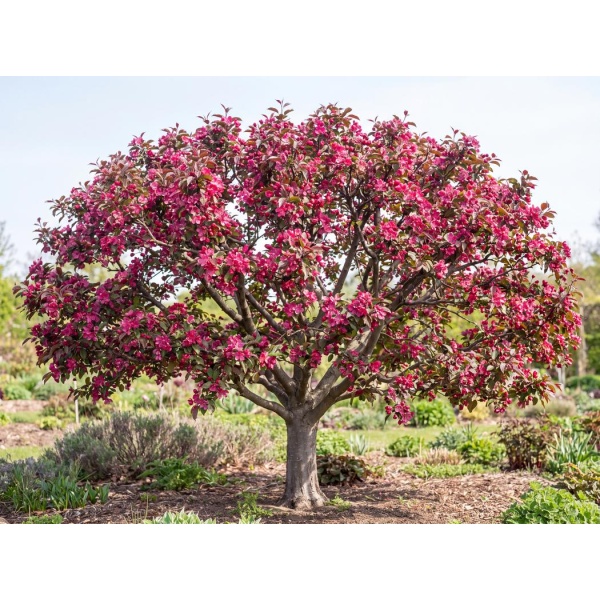
Malus Purple Prince
$419.99
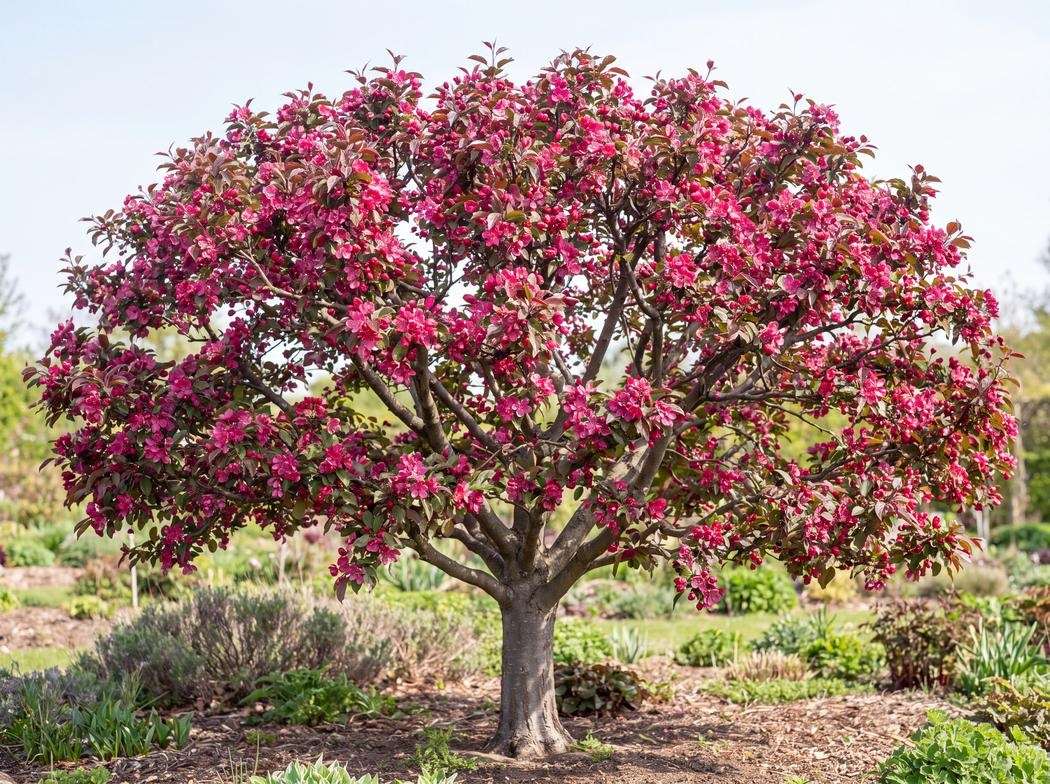
Malus ‘Purple Prince’ is a rounded flowering crabapple with rose-red spring bloom, purple-bronze young leaves, and persistent maroon fruit for birds.
- Description
- Additional information
Description
Malus ‘Purple Prince’ gives a small garden four-season structure with a rounded 18- to 20-foot crown. Carmine buds open to fragrant, single rose-red flowers in spring, followed by purple-bronze foliage that matures to bronze-green.
Tiny maroon crabapples mature in fall and persist into winter, feeding visiting birds and extending the display after leaf fall. The fruit can be cooked for jelly, but the leaves, stems, and seeds contain toxic compounds; remove the seeds before kitchen use.
Plant this 18- to 20-foot-wide tree in full sun and moist, well-drained soil. It accepts a broad pH range, develops its best bloom and foliage color in open light, and needs only light late-winter pruning to remove damaged or misplaced branches.
Additional information
| Height | 550 cm – 610 cm |
|---|---|
| Spread | 550 cm – 610 cm |
| Flowering months | April, May, June |
| Synonyms | Malus × 'Purple Prince', Malus Purple Prince, Malus Purple Spire |
| Family | Rosaceae |
| Propagation | Propagate by budding to preserve the cultivar's characteristics. |
| Pests | May be affected by aphids, borers, scale insects, Japanese beetles, spider mites, or tent caterpillars. |
| Diseases | Shows excellent resistance to apple scab and cedar-apple rust and good resistance to fire blight and powdery mildew; monitor for other leaf spots. |
| Pruning | Prune lightly in late winter, removing damaged, diseased, crossing, or misplaced branches while preserving the rounded crown. |
| Hazardous information | The leaves, stems, and seeds contain cyanogenic compounds and should not be eaten. Remove the seeds before using the small fruits for jelly or preserves. |
| Hazardous | yes |
| Variegated | no |
| Watering instructions | Keep the soil moderately moist while establishing. During dry weather, supply about 1/2 inch of water every 7-10 days without waterlogging the root zone. |
| Sunlight instructions | Grow in full sun with at least six hours of direct light for the strongest flowering, rounded growth, and foliage color. |
| Color flower spring | Red, Pink |
| Aspect | East, South, West |
| Foliage | Deciduous |
| Habit | Bushy |
| Moisture | Moist but Well Drained |
| Ph | Acid, Alkaline, Neutral |
| Position | Full sun |
| Scent | Fragrant |
| Shape | Round, Spreading |
| Suggest planting location | Urban and courtyard gardens, Architectural planting, Flowering borders, Cottage and informal gardens, Wildlife friendly gardens |
| Type | Tree |
| Use for | Architectural, Bird-Friendly, Pollinator-Friendly |
| Drought resistance | yes |
| Cultivation | Plant in full sun in moderately fertile, moist but well-drained soil. Allow about 20 feet for the rounded crown and avoid waterlogged sites. |
| Soil | Chalk, Clay, Loam, Sand |
| Local names | Purple Prince flowering crabapple |
| Blomidon Item No | MALPP050WB, MALPP20010G |
| Usps | Rose-red spring flowers open above emerging purple-bronze foliage., Persistent maroon crabapples extend interest into winter and feed birds. |
| Common Name | Purple Prince Flowering Crab |