
Clematis macropetala ‘Blue Bird’

$34.99
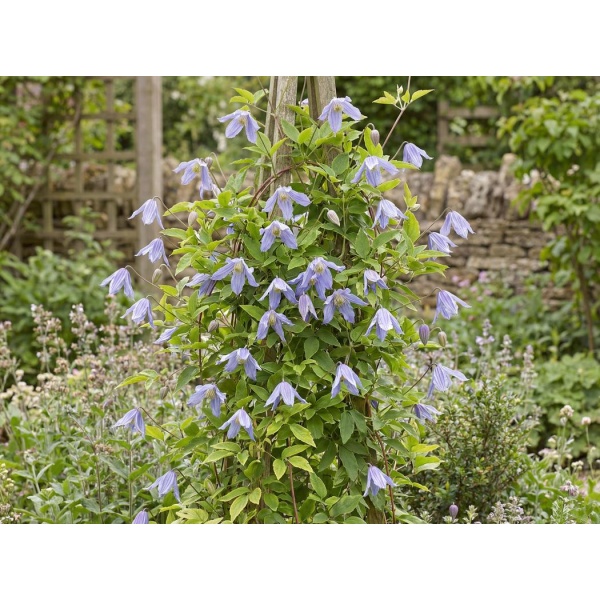
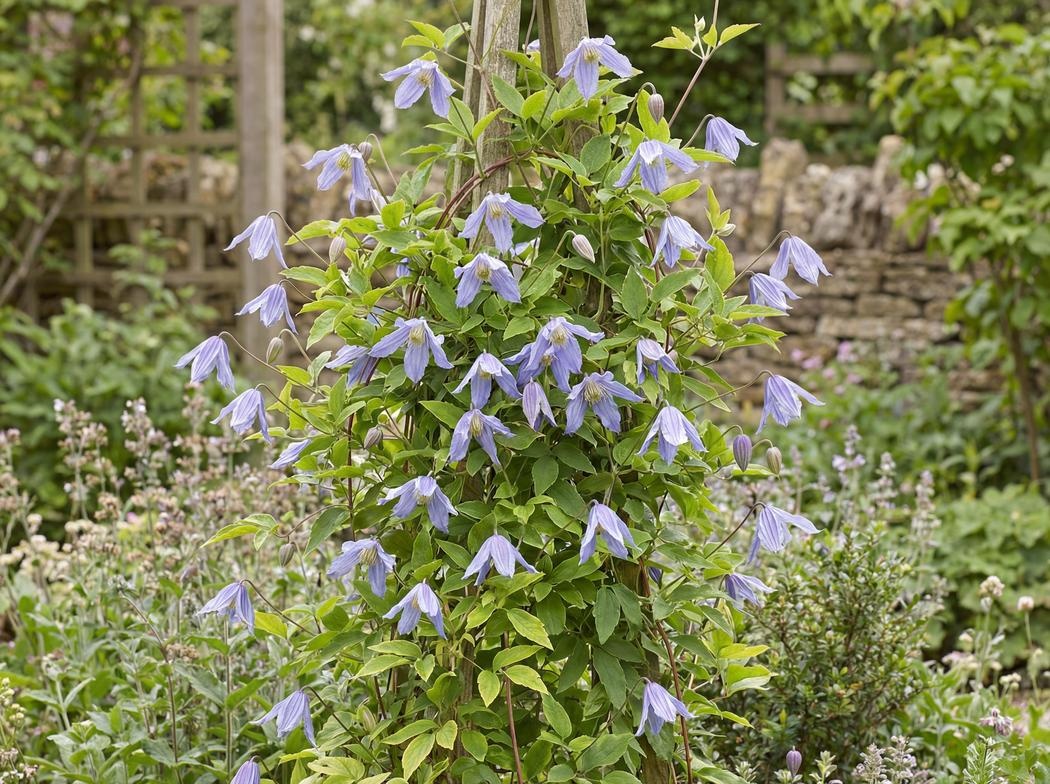
Clematis Blue Bird covers walls and fences with nodding lavender-blue bells in mid-to-late spring, followed by decorative silvery seedheads.
- Description
- Additional information
Description
Lavender-blue bells nod from Clematis Blue Bird as it climbs a wall or fence. The semi-double flowers have paler inner parts and open mainly in mid-to-late spring. Decorative silvery seedheads follow the flowers, and an occasional repeat bloom may appear in late summer.
This deciduous climber also grows in large containers. Choose full sun or partial shade with a cool, shaded base and moist, well-drained soil. Regular pruning is unnecessary once plants are established.
The plant can irritate human skin and is harmful if eaten by cats, dogs, rabbits, and rodents. Gloves help limit contact during handling.
Additional information
| Height | 8 ft – 13 ft |
|---|---|
| Spread | 5 ft – 8 ft |
| Flowering months | April, May, August |
| Synonyms | Clematis alpina Blue Bird, Clematis macropetala 'Blue Bird', Clematis macropetala Blue Bird, Clematis macropetala Bluebird |
| Family | Ranunculaceae |
| Hazardous | yes |
| Variegated | unknown |
| Color flower spring | Blue |
| Color flower summer | Blue |
| Aspect | East, South, West, North |
| Foliage | Deciduous |
| Habit | Climber |
| Moisture | Moist but Well Drained |
| Ph | Acid, Alkaline, Neutral |
| Position | Full sun, Partial shade |
| Shape | Upright |
| Suggest planting location | Urban and courtyard gardens, Cut flower use, Patio and container use, Cottage and informal gardens, Climbers and wall shrubs |
| Type | Climber |
| Use for | Wall cover, Cutting Garden, Container Planting |
| Years to max height | 2 |
| Soil | Chalk, Clay, Loam, Sand |
| Local names | Blue Bird Clematis, Blue Bird Bigpetal Clematis, Clematis |
| Blomidon Item No | CLEMBB0001G |
| Usps | Nodding lavender-blue flowers have a semi-double bell shape., Climbing growth covers walls and fences., Use full sun or partial shade and moist, well-drained soil. |
| Propagation | Take softwood cuttings in spring or semi-ripe cuttings in early summer, or propagate by layering. |
| Pests | Young growth may be attacked by aphids, slugs, snails, and caterpillars. |
| Diseases | Clematis wilt and slime flux may occur, while honey fungus is uncommon. |
| Pruning | Established plants need no routine pruning. Cut back excessive or damaged growth immediately after flowering if needed. |
| Hazardous information | Contact may irritate human skin, and the plant is harmful if eaten by cats, dogs, rabbits, or rodents. Wear gloves when handling it. |
| Watering instructions | Keep the soil moist while allowing excess water to drain away. |
| Sunlight instructions | Grow in full sun or partial shade, with the base kept shaded. |