
Picea omorika Nana
$359.99
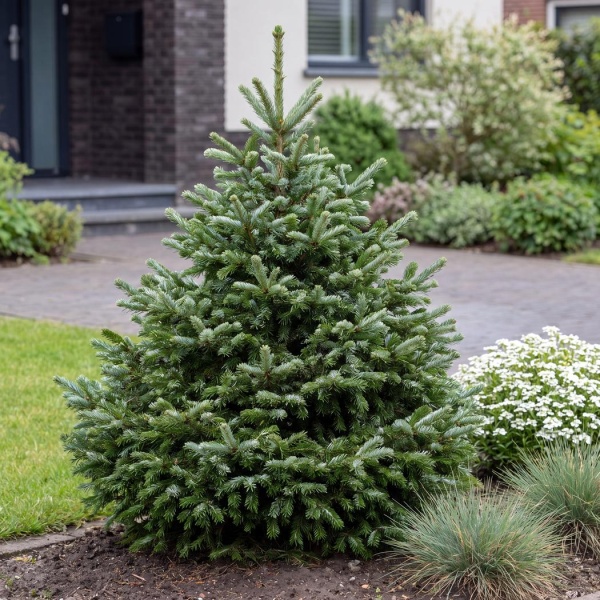
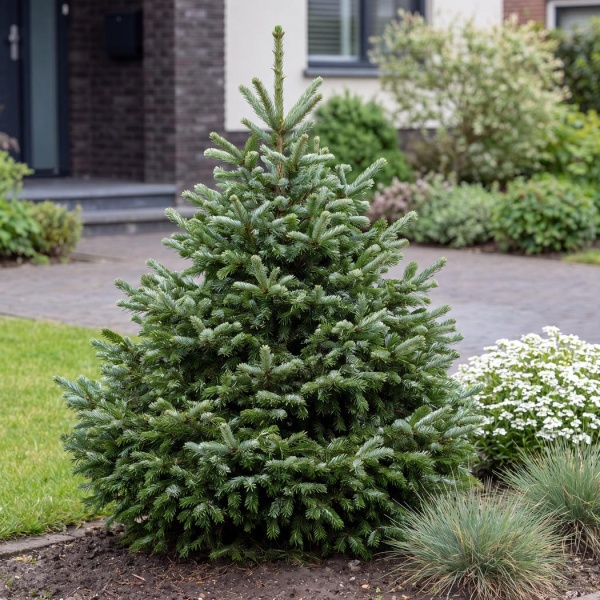
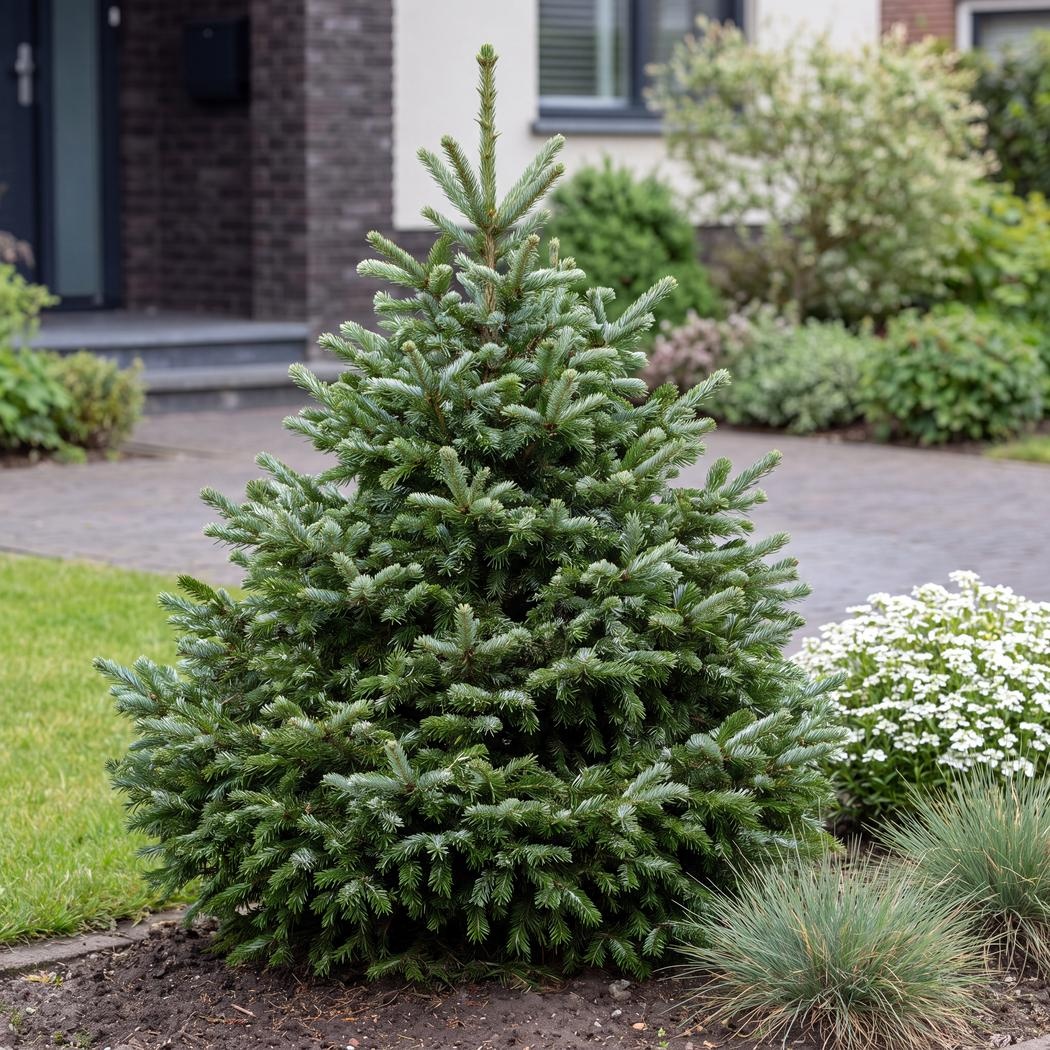
Picea omorika Nana is a slow-growing dwarf Serbian spruce with dense conical form and dark green needles that flash silvery white beneath.
- Description
- Additional information
Description
Picea omorika Nana begins as a dense rounded evergreen and gradually develops into a broad pyramid. Dark glossy green needles have white stomatal bands beneath, producing a distinctive silvery blue-green shimmer when the branch tips turn.
This slow-growing conifer provides dependable structure in rock gardens, foundation plantings, mixed borders, and large outdoor containers. Older plants can reach 2.5 to 4 meters tall, so allow room for the compact young shrub to develop over decades.
Grow it in full sun or partial shade in moist, well-drained soil. It accepts clay, loam, sand, and a broad pH range, but benefits from shelter against cold drying winds. Routine pruning is unnecessary.
Additional information
| Height | 8 ft – 13 ft |
|---|---|
| Spread | 5 ft – 8 ft |
| Flowering months | April, May, June |
| Synonyms | Picea omorika 'Nana' |
| Family | Pinaceae |
| Hazardous | unknown |
| Variegated | unknown |
| Color flower spring | Red |
| Color flower summer | Red |
| Aspect | East, South, West, North |
| Foliage | Evergreen |
| Habit | Bushy, Compact |
| Moisture | Moist but Well Drained |
| Ph | Acid, Alkaline, Neutral |
| Position | Full sun, Partial shade |
| Shape | Cone, Round, Pyramidal |
| Suggest planting location | Four-Season Garden, Patio and container use, Garden edging and borders, Rock and alpine gardens, Gravel and stone gardens |
| Type | Conifer |
| Use for | Hedge, Low maintenance, Container Planting |
| Years to max height | 20 |
| Soil | Clay, Loam, Sand |
| Local names | Dwarf Serbian Spruce, Nana Serbian Spruce, Serbian Spruce |
| Blomidon Item No | MO23012895, PICOMN0003G, PICOMN0006G, 201994387, 202017329, 202066373, 202066462 |
| Usps | Bicolored needles create a silvery shimmer in every season., Dense growth matures from a rounded shrub into a broad pyramid., Steady moisture supports a compact, densely branched crown. |
| Propagation | Propagate by grafting or root semi-hardwood cuttings after new shoots begin to firm. |
| Pests | May be susceptible to adelgids, spider mites, conifer aphids, budworms, and borers. |
| Diseases | May be susceptible to honey fungus. |
| Pruning | No routine pruning is required; remove dead or damaged branches as needed. |
| Watering instructions | Water regularly until established, then maintain moist, well-drained soil. |
| Sunlight instructions | Provide full sun or partial shade, with shelter from cold drying winds. |