
Syringa vulgaris Agincourt Beauty
$54.99
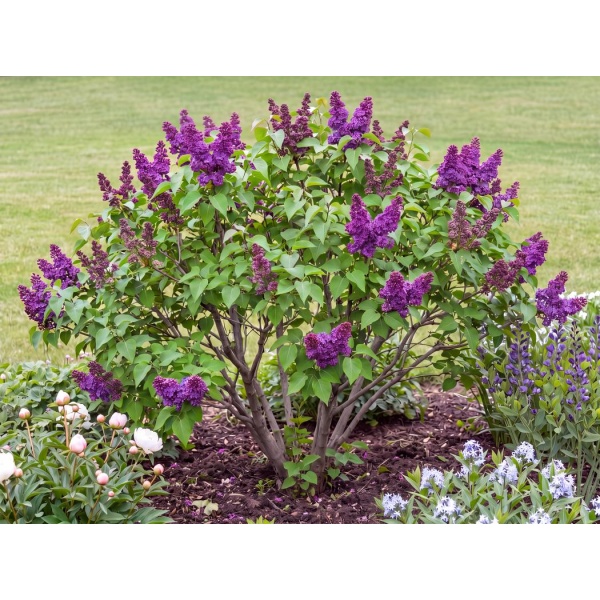
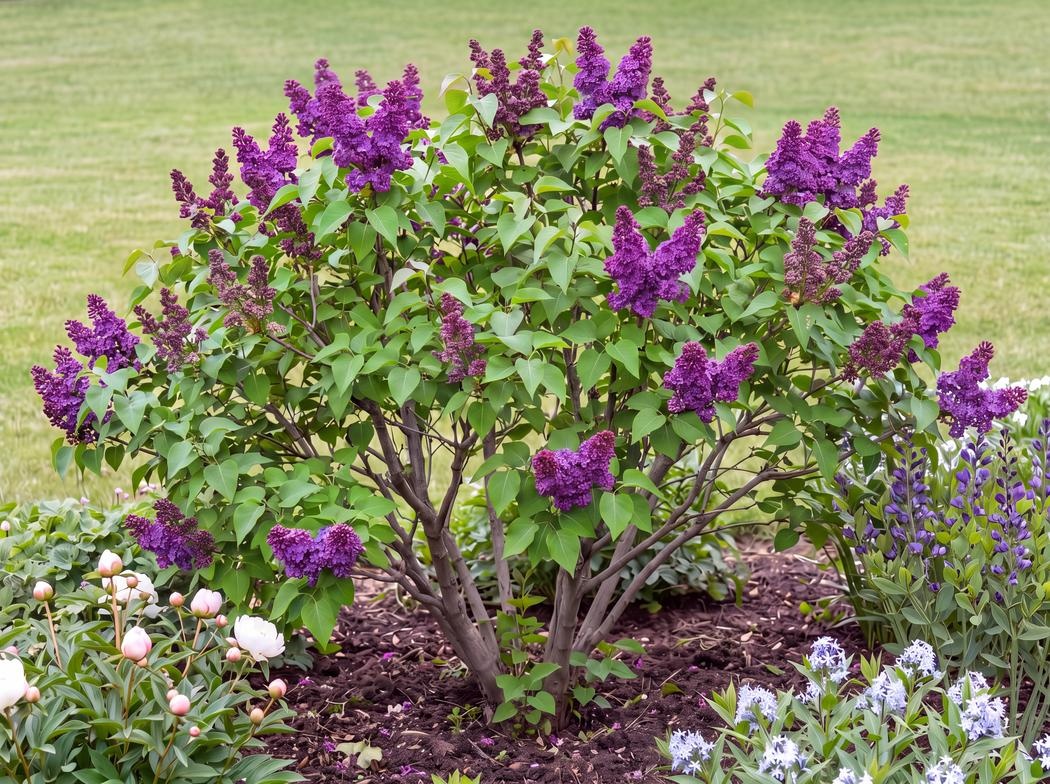
Syringa vulgaris Agincourt Beauty is a tall fragrant lilac with huge single deep-violet florets in dense spring panicles.
- Description
- Additional information
Description
Syringa vulgaris Agincourt Beauty is a vigorous tall deciduous lilac with multiple gray-brown stems, opposite heart-shaped blue-green leaves, and an upright broadly rounded framework. It can mature from about 245 to 455 cm high.
Dark reddish-purple buds open in spring into dense panicles of strongly fragrant, single deep-violet to purplish-blue flowers. The individual florets are exceptionally large, making this cultivar distinctive in bloom and valuable for cutting.
Plant in full sun for the best flowering, using fertile, humus-rich, moist but well-drained soil with good air circulation. Light shade is tolerated. Prune just after bloom, remove faded panicles, and control root suckers where colonial spread is unwanted.
Additional information
| Height | 7 ft – 8 ft |
|---|---|
| Spread | 6 ft – 7 ft |
| Flowering months | May, June |
| Synonyms | Syringa vulgaris 'Agincourt Beauty' |
| Family | Oleaceae |
| Hazardous | unknown |
| Variegated | no |
| Color flower spring | Purple |
| Aspect | East, South, West |
| Foliage | Deciduous |
| Habit | Clump-former, Suckering |
| Moisture | Moist but Well Drained |
| Ph | Alkaline, Neutral |
| Position | Full sun |
| Scent | Fragrant |
| Shape | Oval, Upright |
| Suggest planting location | Pollinator Garden, Flowering borders, Cut flower use, Hedges and screening plants, Cottage and informal gardens |
| Type | Shrub |
| Use for | Hedge, Cutting Garden, Pollinator-Friendly |
| Soil | Clay, Loam |
| Local names | Agincourt Beauty common lilac |
| Blomidon Item No | 148612, 153059, SYRVUAB0002G, SYRVUAB0004G |
| Usps | Large single deep-violet florets create a bold late-spring display., Fragrant upright panicles are excellent for cutting., Give it full sun and good drainage for reliable flowering. |
| Color flower summer | Purple |
| Cultivation | Grow in full sun in moist but well-drained neutral or alkaline soil. Prune lightly immediately after flowering and thin overcrowded branches to improve airflow. |
| Propagation | Propagate vegetatively by softwood cuttings, layering, or grafting to preserve the cultivar; remove any shoots arising from below a graft. |
| Pests | Lilac borers, leaf miners, scale insects, and caterpillars may occur. |
| Diseases | Powdery mildew, bacterial blight, leaf spots, and witches' broom may occur; good air circulation reduces disease pressure. |
| Pruning | Prune immediately after flowering, remove faded panicles before seed set, and cut unwanted root suckers at their origin. |
| Watering instructions | Keep soil moist while establishing; water deeply in prolonged dry weather. |
| Sunlight instructions | Use full sun for maximum bloom; light partial shade is tolerated. |
| Years to max height | 10 |
| Drought resistance | no |
| Common Name | Agincourt Beauty Lilac |