
Thuja occidentalis Golden Globe
$72.99
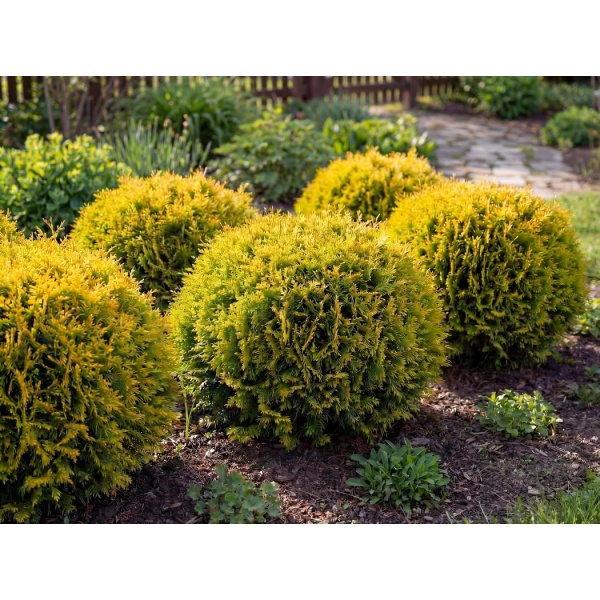
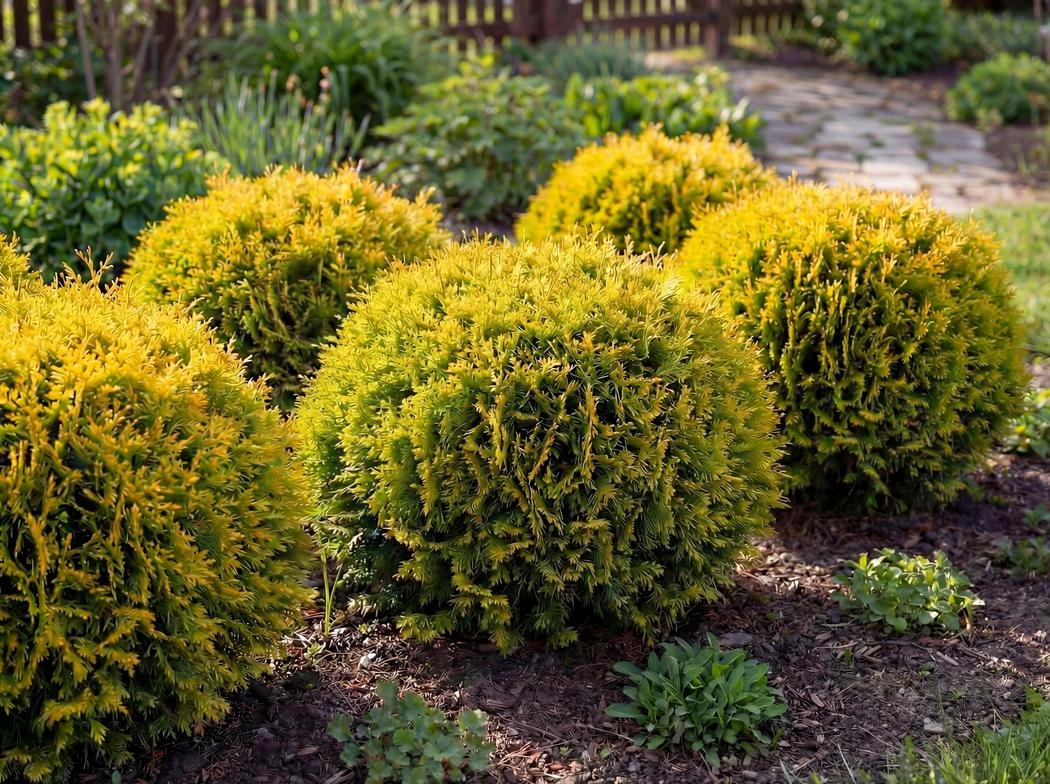
Thuja occidentalis Golden Globe forms a compact golden sphere for foundations, low hedges, and patio containers, keeping its color through winter.
- Description
- Additional information
Description
Bright golden-yellow foliage forms a dense, naturally rounded sphere on Thuja occidentalis Golden Globe. Its compact size fits foundation beds, low hedges, borders, and containers, while the evergreen foliage carries color through winter.
Plant it in sun to partial shade in evenly moist, well-drained soil. Water regularly while roots establish, add fertilizer in early spring, and prune lightly only if shaping is needed. The foliage is harmful if eaten and may cause a skin allergy, so wear gloves when handling.
Additional information
| Height | 3 ft – 5 ft |
|---|---|
| Spread | 3 ft – 5 ft |
| Synonyms | Thuja Golden Globe, Thuja occidentalis 'Golden Globe', Thuja occidentalis Globosa Aurea |
| Family | Cupressaceae |
| Hazardous | yes |
| Variegated | unknown |
| Aspect | South, West |
| Foliage | Evergreen |
| Habit | Bushy, Compact |
| Moisture | Moist but Well Drained |
| Ph | Acid, Alkaline, Neutral |
| Position | Full sun, Partial shade |
| Shape | Round |
| Suggest planting location | Urban and courtyard gardens, Architectural planting, Patio and container use, Hedges and screening plants, Rock and alpine gardens |
| Type | Conifer |
| Use for | Architectural, Foundation Planting, Container Planting |
| Years to max height | 10 |
| Soil | Chalk, Clay, Loam, Sand |
| Local names | Golden Globe Arborvitae, American Arborvitae, Eastern White-Cedar |
| Blomidon Item No | MO23013377, THUOCGG0702G, 143926, 201993803, 201968574, 202067783, 201703121, 201963724, 201703122, 202022587 |
| Usps | Dense golden-yellow sprays form a naturally rounded globe., Its compact habit fits foundations, low hedges, and containers., Grow in sun or partial shade with moist, well-drained soil. |
| Propagation | Take semi-hardwood cuttings in late summer. |
| Pests | Watch for scale insects and conifer aphids. |
| Diseases | Watch for honey fungus, thuja blight, Coryneum canker, and other fungal diseases. |
| Pruning | Prune lightly in late winter or early spring only when shaping is needed. |
| Hazardous information | The foliage is harmful if eaten and may cause a skin allergy; wear gloves when handling it. |
| Watering instructions | Keep the soil evenly moist and water regularly during establishment. |
| Sunlight instructions | Grow in full sun, with afternoon shade in hot summer areas. |