
Hippophae rhamnoides
$82.99
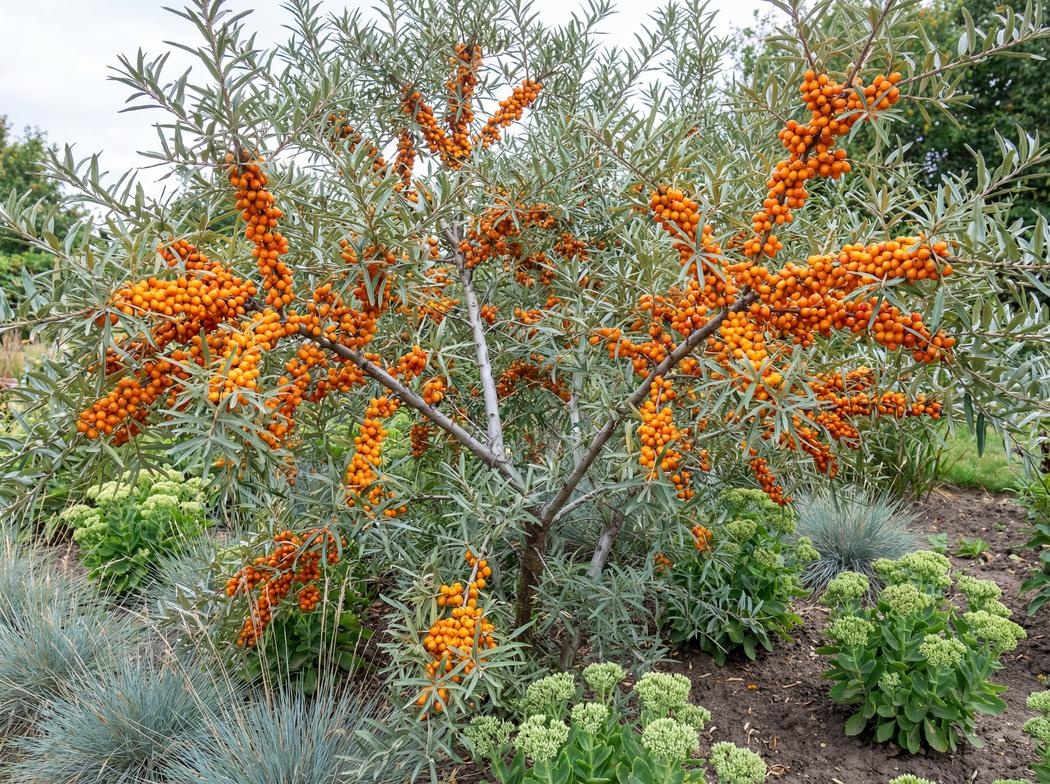
Hippophae rhamnoides is a thorny silver-leaved shrub with edible tart orange fruit for juice, preserves, and productive hedges.
- Description
- Additional information
Description
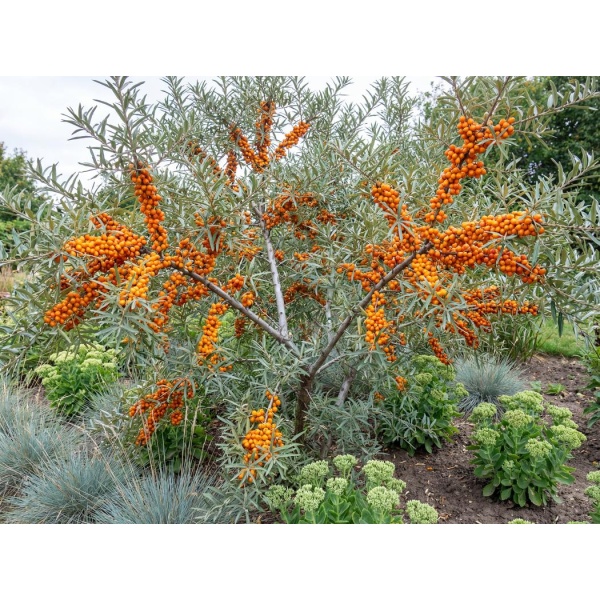
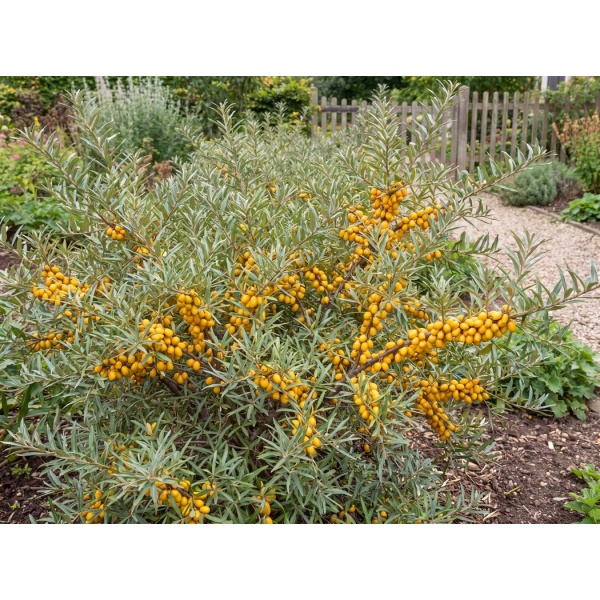
Hippophae rhamnoides combines narrow silver-green foliage with edible orange fruit on a broad, suckering shrub. Its dense thorny growth can form a productive hedge while a strong root system helps stabilize soil.
The fruit is very tart when raw and is commonly used for juice, jam, sauces, and other processed foods. Female plants need a male sea buckthorn nearby for wind pollination and reliable fruit production.
Grow it in full sun and freely drained soil. It tolerates drought, wind, saline conditions, and poor ground, but fruit production benefits from water while berries are developing. Manage suckers and wear gloves around the sharp thorns.
Additional information
| Height | 10 ft – 15 ft |
|---|---|
| Spread | 10 ft – 15 ft |
| Flowering months | March, April |
| Synonyms | Elaeagnus rhamnoides, Hippophae rhamnoides Juliet, Hippophae rhamnoides L. |
| Family | Elaeagnaceae |
| Hazardous | yes |
| Variegated | no |
| Color flower spring | Brown, Yellow |
| Aspect | East, South, West |
| Foliage | Deciduous |
| Habit | Bushy, Suckering |
| Moisture | Moist but Well Drained, Well Drained Soil |
| Ph | Acid, Alkaline, Neutral |
| Position | Full sun |
| Shape | Round, Spreading |
| Suggest planting location | Banks and slopes, Low maintenance planting, Hedges and screening plants, Coastal conditions, Edible fruit plants |
| Type | Shrub |
| Use for | Hedge, Edible, Erosion Control |
| Years to max height | 20 |
| Drought resistance | yes |
| Soil | Loam, Sand |
| Harvest in | 9, 10 |
| Local names | Sea buckthorn |
| Blomidon Item No | 121170, 121169, 121171, 108886, 113752, 104623, MO23004514, HIPPRHG0002G, HIPRH000002G, 201813351, 201813354, 201813350, 201813352, 201710787, 202071696, 201908202, 201911306, 202017500 |
| Propagation | Sow seed in spring or fall; use known-sex nursery plants when fruit production is the goal. |
| Pests | Few serious insect or vertebrate pest problems are commonly reported. |
| Diseases | Few serious disease problems are commonly reported. |
| Pruning | Prune moderately each year, heading back long branches and removing crossing growth. |
| Hazardous information | Sharp, stout thorns can cause puncture and scratch injuries during pruning or harvest. |
| Watering instructions | Water after planting and during fruit development; avoid ponding. |
| Sunlight instructions | Plant in full sun for reliable flowering and fruit production. |