
Rosa Joseph’s Coat
$54.99
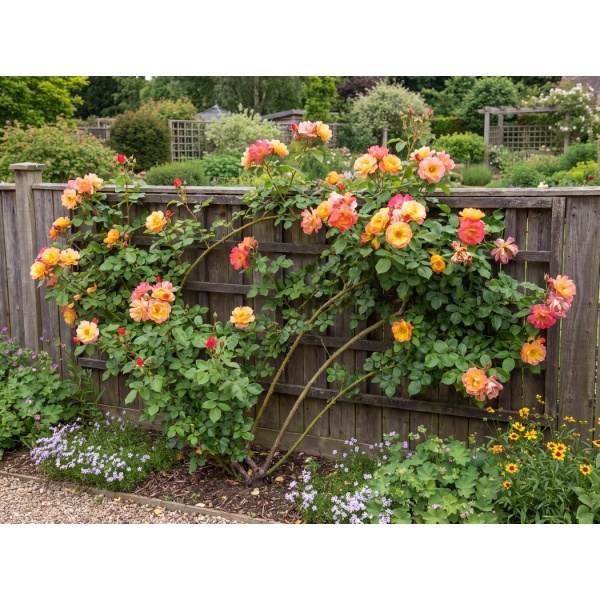
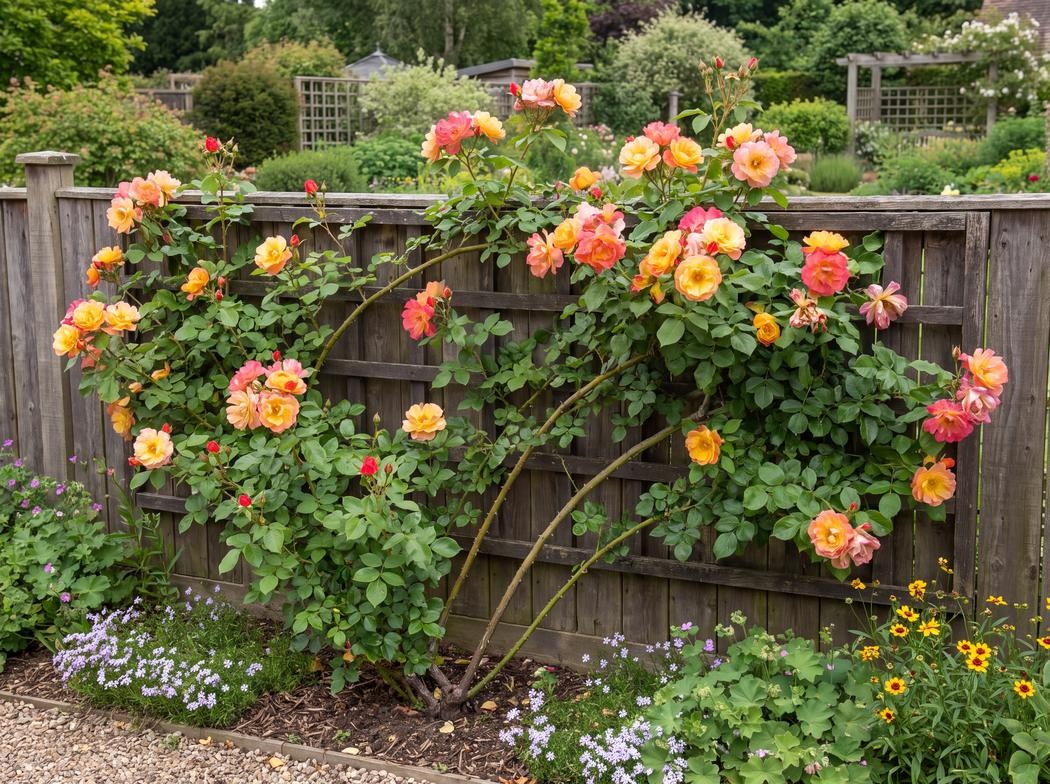
Rosa Josephs Coat covers a sunny fence or arbor with lightly fragrant yellow, orange, pink, and red clusters from spring into fall.
- Description
- Additional information
Description
Rosa Josephs Coat turns a sunny fence, arbor, or trellis into a tall screen of multicolored flowers. Lightly fragrant clusters open in yellow, orange, pink, and red, and repeat from spring into fall above glossy green foliage.
Its vigorous canes grow 8 to 12 feet high and need sturdy support. Plant in fertile, moist but well-drained soil, feed in spring and early summer, and deadhead spent flowers to encourage the next flush. Prickly stems need gloves during tying and pruning.
Additional information
| Height | 8 ft – 12 ft |
|---|---|
| Spread | 3 ft – 4 ft |
| Flowering months | May, June, July, August, September, October |
| Synonyms | Rosa Joseph's Coat |
| Family | Rosaceae |
| Hazardous | yes |
| Variegated | no |
| Color flower autumn | Red, Yellow, Pink, Orange |
| Color flower spring | Red, Yellow, Pink, Orange |
| Color flower summer | Red, Yellow, Pink, Orange |
| Aspect | East, South, West |
| Foliage | Deciduous |
| Habit | Bushy, Climber |
| Moisture | Moist but Well Drained, Well Drained Soil |
| Ph | Acid, Alkaline, Neutral |
| Position | Full sun |
| Scent | Fragrant Light |
| Shape | Upright |
| Suggest planting location | Wall and boundary borders, Cut flower use, Hedges and screening plants, Cottage and informal gardens, Climbers and wall shrubs |
| Type | Climber |
| Use for | Hedge, Wall cover, Cutting Garden |
| Cultivation | Plant in full sun in fertile, moist but well-drained soil. Tie vigorous stems to sturdy support and mulch to retain even moisture. Feed in spring and early summer, then deadhead for repeat bloom. |
| Soil | Chalk, Clay, Loam, Sand |
| Local names | Joseph's Coat |
| Blomidon Item No | ROSCLJC0003G |
| Usps | Yellow, orange, pink, and red flowers bloom from spring into fall., Vigorous canes cover a fence, arbor, or trellis., Full sun and moist, well-drained soil support the best flowering. |
| Propagation | Propagate by hardwood cuttings in fall, softwood cuttings in spring or summer, or chip budding in summer. |
| Pests | Watch for aphids, rose leafhopper, scale insects, caterpillars, and rose sawflies. |
| Diseases | It may develop black spot, rust, powdery mildew, dieback, or replant disease. |
| Pruning | For the first two to three seasons, remove only dead or damaged canes. After that, shorten growth by one-third each year and deadhead spent flowers. |
| Hazardous information | Prickly stems can cause puncture or scratch injuries, and the ornamental fruit should not be eaten. Wear gloves when handling the canes. |
| Watering instructions | Keep soil moist but well drained, especially while establishing. |
| Sunlight instructions | Grow in full sun for the strongest flowering. |
| Common Name | Joseph's Coat Rose |