

Vitis ‘Himrod’

$37.99
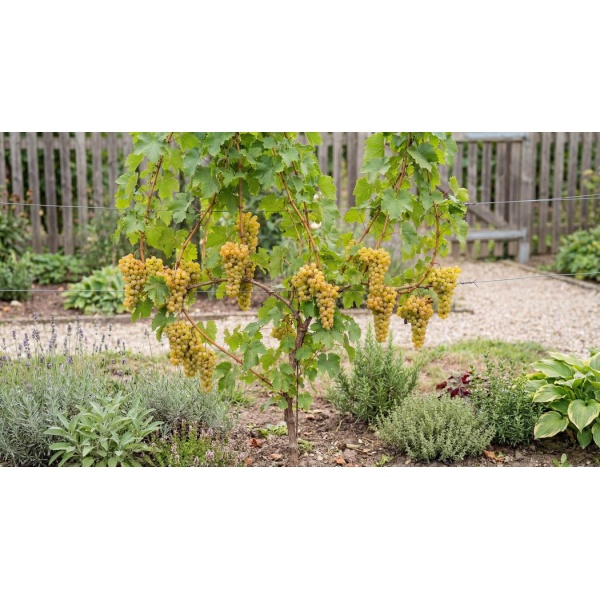
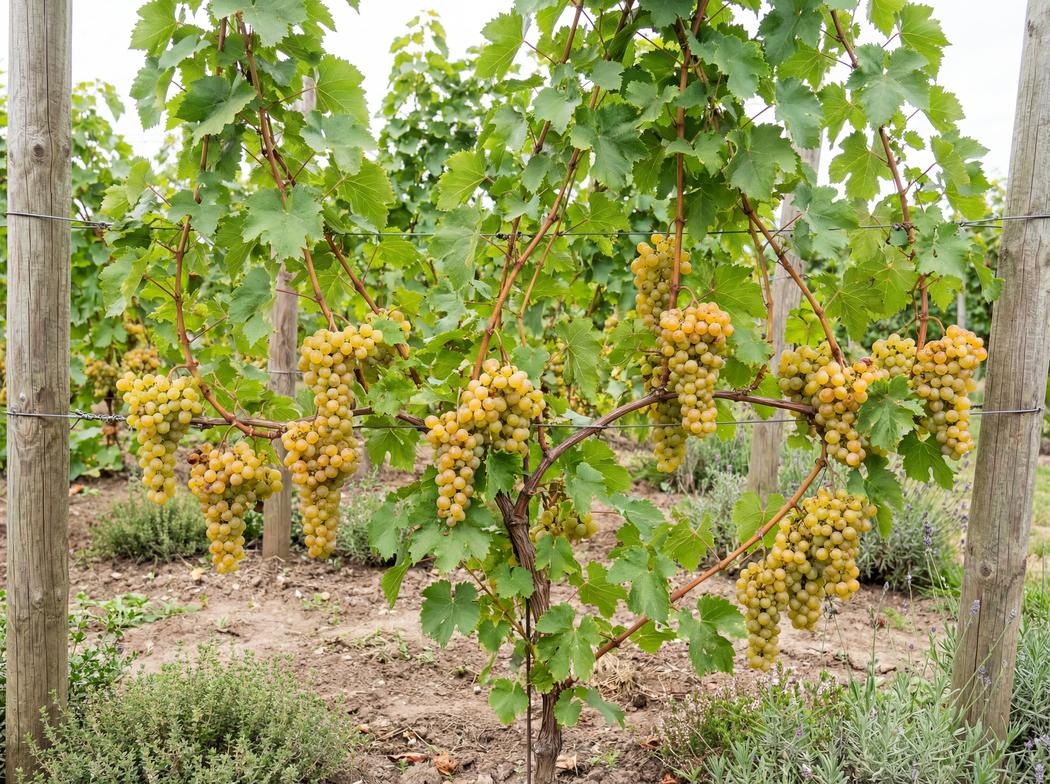
Vitis Himrod covers a sunny trellis with vigorous deciduous growth and loose clusters of sweet, seedless golden grapes for eating fresh or drying.
- Description
- Additional information
Description
Vitis Himrod brings loose clusters of sweet, seedless golden grapes to a sunny wall, sturdy trellis, or pergola. The vigorous deciduous vine gives an early harvest for fresh eating, preserves, or drying.
Provide full sun, a sheltered support, and moist but well-drained neutral or slightly alkaline soil. Mulch to conserve moisture, water thoroughly during dry spring and summer weather, and feed while growth and fruit are developing.
Prune the permanent framework while the vine is dormant, then train and trim new shoots through spring and summer. The fruit is toxic to dogs if eaten, so keep fallen grapes out of their reach.
Additional information
| Height | 26 ft – 39 ft |
|---|---|
| Spread | 13 ft – 26 ft |
| Flowering months | June, July, August |
| Synonyms | Vitis 'Himrod', Vitis Himrod Seedless, Vitis New York 15310, Vitis vinifera Himrod |
| Family | Vitaceae |
| Hazardous | yes |
| Variegated | unknown |
| Color flower summer | Green, Yellow |
| Aspect | South, West |
| Foliage | Deciduous |
| Habit | Climber |
| Moisture | Moist but Well Drained |
| Ph | Alkaline, Neutral |
| Position | Full sun |
| Scent | Fragrant Light |
| Shape | Spreading |
| Suggest planting location | Urban and courtyard gardens, Wall and boundary borders, Edible fruit plants, Cottage and informal gardens, Climbers and wall shrubs |
| Type | Fruit |
| Use for | Wall cover, Bee-Friendly, Edible |
| Years to max height | 5 |
| Soil | Chalk, Loam, Sand |
| Harvest in | 8, 9 |
| Local names | Himrod grape |
| Blomidon Item No | MO23014583, VITHI0002G, 201817819, 202015438, 201910713, 14098 |
| Usps | Loose clusters of golden-yellow, seedless grapes hang among green leaves., The vigorous vine covers a sunny trellis while producing sweet fruit., Give full sun and moist, well-drained soil. |
| Propagation | Take hardwood cuttings in late autumn or winter, or use softwood or semi-ripe cuttings from late spring to midsummer. |
| Pests | Watch for grapevine blister mite, red spider mite, scale insects, mealybugs, and spotted wing drosophila. |
| Diseases | Powdery mildew, gray mold, downy mildew, honey fungus, and virus diseases may occur. |
| Pruning | Prune the dormant framework in early to midwinter, then trim and train new shoots in spring and summer. |
| Hazardous information | The fruit is toxic to dogs if eaten, so keep grapes and raisins out of their reach. |
| Watering instructions | Keep soil moist and water thoroughly during dry spring and summer weather. |
| Sunlight instructions | Grow in full sun on a sheltered south- or west-facing support. |