
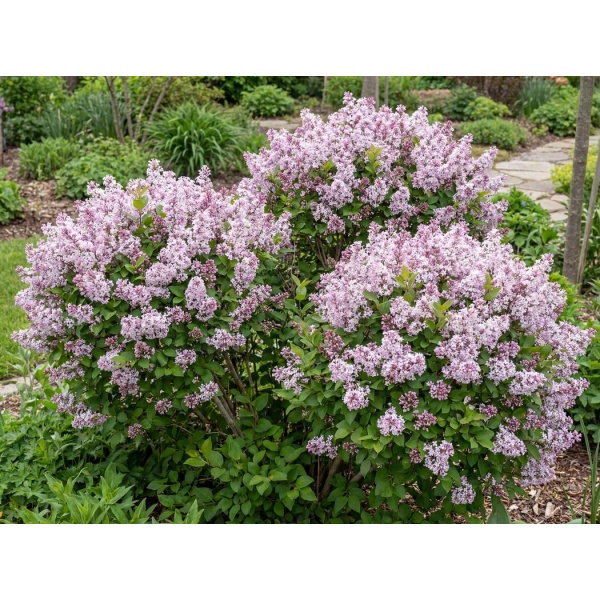
Syringa meyeri ‘Palibin’

$64.99
Syringa meyeri Palibin forms a compact, fragrant spring-flowering shrub for low hedges, foundations, and sunny borders.
- Description
- Additional information
Description
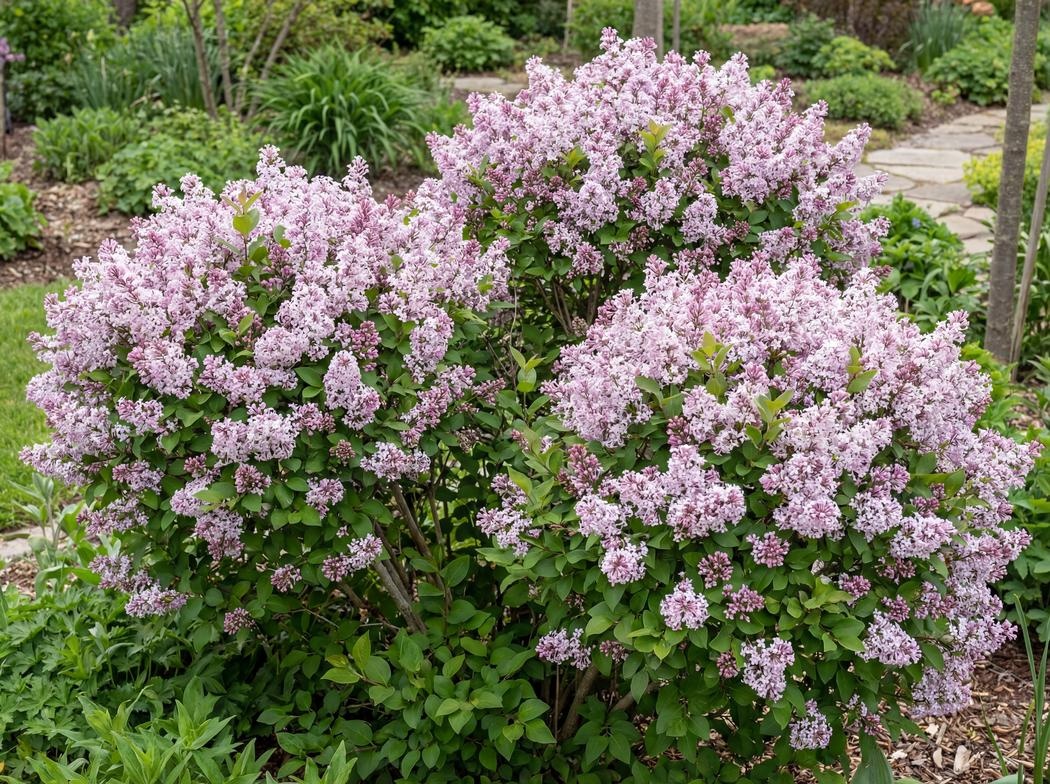
Fragrant lilac-pink flower panicles cover Syringa meyeri Palibin in late spring and early summer. Its compact, rounded form suits sunny flowering borders, foundation plantings, and low hedges.
Grow it in fertile, humus-rich, well-drained soil with neutral or alkaline pH. Full sun supports the best flowering, and the shrub appreciates mulch when planted in sun.
Remove spent flower clusters and complete any shaping immediately after flowering. The deciduous leaves stay dark green through summer.
Additional information
| Height | 3 ft – 5 ft |
|---|---|
| Spread | 3 ft – 5 ft |
| Flowering months | May |
| Synonyms | Syringa meyeri 'Palibin', Syringa meyeri 'Palibin' (STAM), Syringa meyeri var. spontanea Palibin, Syringa Pubescens Pubescens Palibin |
| Family | Oleaceae |
| Hazardous | unknown |
| Variegated | unknown |
| Color flower spring | Purple, Pink |
| Color flower summer | Purple, Pink |
| Aspect | East, South, West, North |
| Foliage | Deciduous |
| Habit | Bushy, Compact |
| Moisture | Moist but Well Drained, Well Drained Soil |
| Ph | Alkaline, Neutral |
| Position | Full sun, Partial shade |
| Scent | Fragrant |
| Shape | Round |
| Suggest planting location | Low maintenance planting, Urban and courtyard gardens, Flowering borders, Patio and container use, Hedges and screening plants |
| Type | Shrub |
| Use for | Hedge, Foundation Planting, Low maintenance |
| Years to max height | 10 |
| Cultivation | Plant in full sun or light shade in fertile, humus-rich, well-drained soil. Full sun gives the strongest bloom, while neutral to alkaline soil is preferred. Mulch around the root zone after planting. |
| Soil | Chalk, Clay, Loam, Sand |
| Local names | Palibin Meyer Lilac, Dwarf Korean Lilac |
| Usps | Dense lilac-pink panicles bring fragrant late-spring color., Its compact rounded habit fits low hedges and foundation plantings., Full sun and well-drained soil support the best flowering. |
| Propagation | Take greenwood cuttings in early summer, or layer a flexible stem during the same period. |
| Pests | Watch for lilac leaf-mining moth, thrips, and willow scale. |
| Diseases | Lilac blight, honey fungus, Phytophthora, powdery mildew, and bacterial canker may occur. |
| Pruning | Remove faded flower clusters and shape the shrub immediately after flowering. |
| Watering instructions | Water as needed to keep the soil moist but well drained. |
| Sunlight instructions | Plant in full sun for the strongest flowering display. |