
Chelone obliqua
$19.99
A moisture-loving native perennial with sharply serrated opposite leaves and compact late-season spikes of dusky pink to purple turtlehead flowers.
- Description
- Additional information
Description
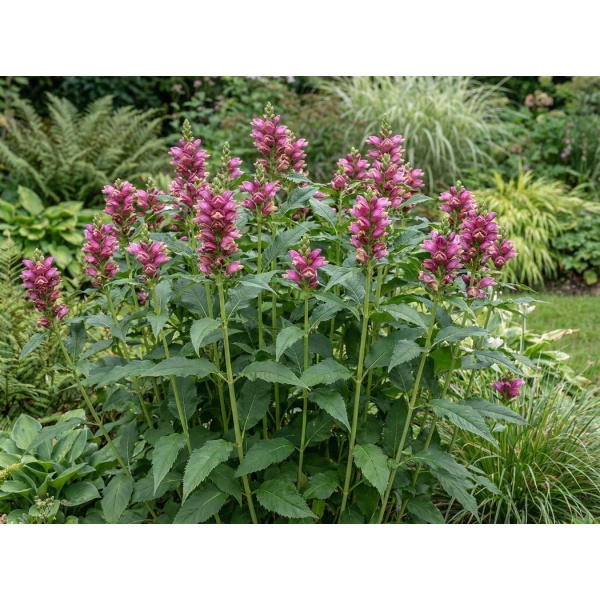
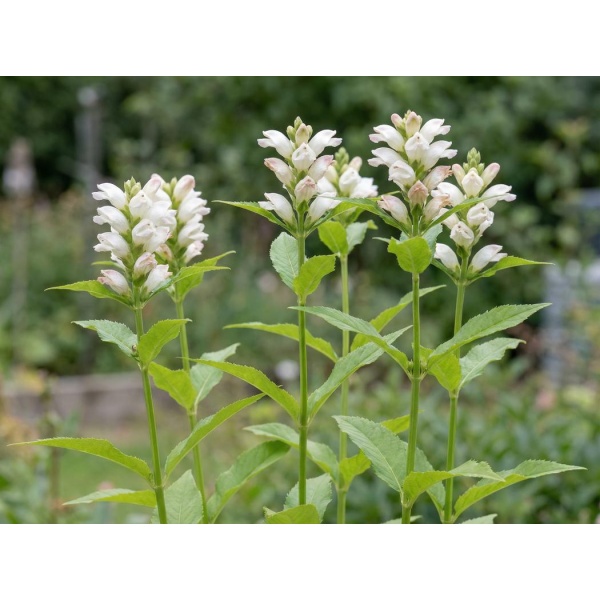
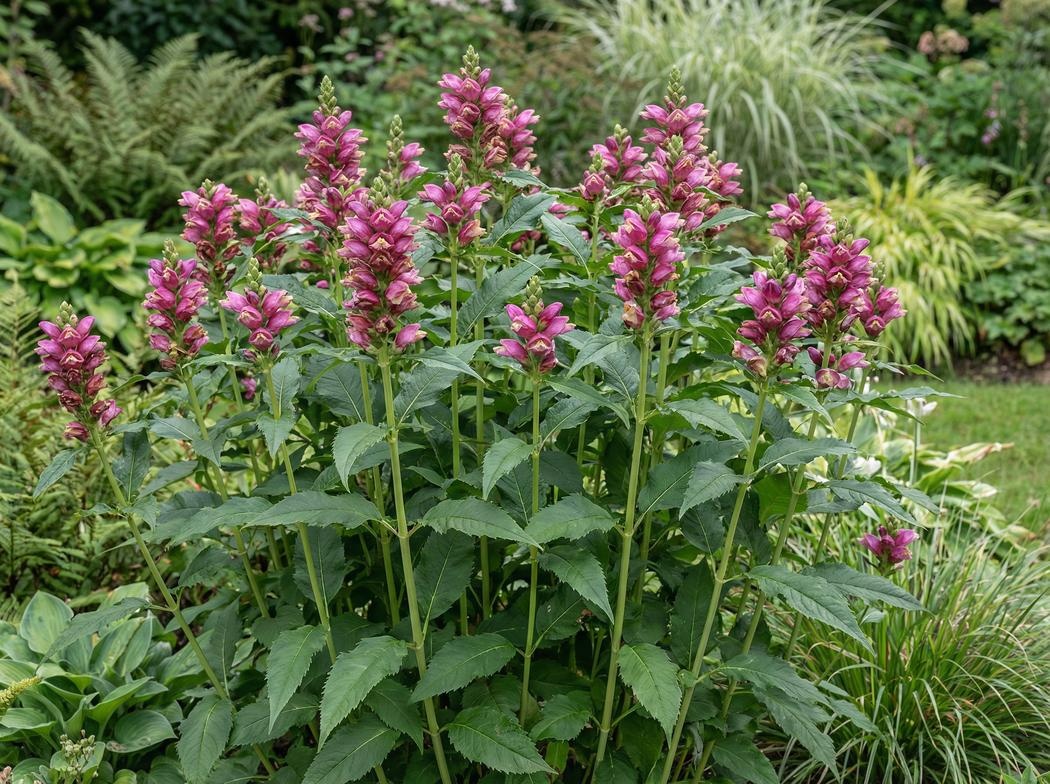
Chelone obliqua is a clump-forming deciduous perennial native to the southeastern United States. Smooth upright green stems carry opposite pairs of narrow lance-shaped leaves with prominent veins and sharply serrated margins.
From midsummer into autumn, short dense terminal spikes open dusky deep pink to purple tubular flowers. Each two-lipped bloom resembles a turtle head and contains a pale beard inside the lower lip, attracting hummingbirds and pollinating insects.
Grow pink turtlehead in deep fertile humus-rich soil that remains consistently moist to wet, in full sun or partial shade. It suits rain gardens, bogs, stream edges and pond margins. Mulch with organic matter, water during dry periods, deadhead fading spikes and divide established clumps in spring.
Additional information
| Height | 2 ft – 3 ft |
|---|---|
| Spread | 10 in – 2 ft |
| Flowering months | July, August, September, October |
| Synonyms | Chelone obliqua subsp. typica |
| Family | Plantaginaceae |
| Hazardous | no |
| Variegated | no |
| Color flower autumn | Purple, Pink |
| Color flower summer | Purple, Pink |
| Aspect | East, South, West, North |
| Foliage | Deciduous |
| Habit | Bushy, Clump-former |
| Moisture | Moist but Well Drained, Wet or Damp Soil |
| Ph | Acid, Alkaline, Neutral |
| Position | Full sun, Partial shade |
| Scent | No |
| Shape | Mound-forming, Upright |
| Suggest planting location | Bog Garden, Rain Garden, Pond Margin |
| Type | Perennial |
| Use for | Shade Garden, Pollinator-Friendly |
| Years to max height | 2 |
| Drought resistance | no |
| Soil | Clay, Loam |
| Local names | pink turtlehead |
| Blomidon Item No | MO23016632, ZCHEOB0001G, 201811668 |
| Cultivation | Plant in spring or autumn in a rain garden, moist border or pond edge. Water through establishment, maintain an organic mulch and deadhead fading spikes. |
| Propagation | Sow seed in containers in early spring, divide established clumps in spring or root soft tip cuttings in late spring to early summer. |
| Pests | Slugs and snails may damage young foliage and tender shoots. |
| Diseases | Generally disease-free, although powdery mildew, rust and leaf spot may occur when plants are dry or overcrowded. |
| Pruning | Deadhead fading flower spikes, pinch stems in spring if a shorter plant is needed and cut old growth after natural dieback. |
| Watering instructions | Keep the root zone consistently moist to wet with deep watering during dry periods; do not allow established clumps to suffer drought. |
| Sunlight instructions | Grow in full sun where moisture is constant or in partial shade where summer conditions are warmer or drier. |