
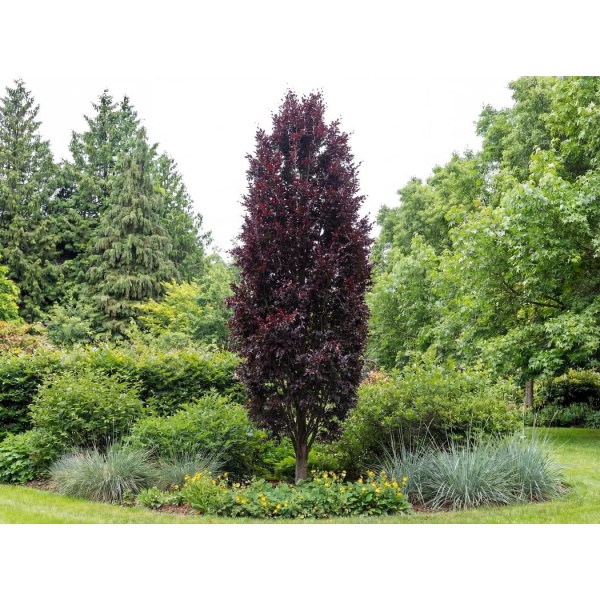

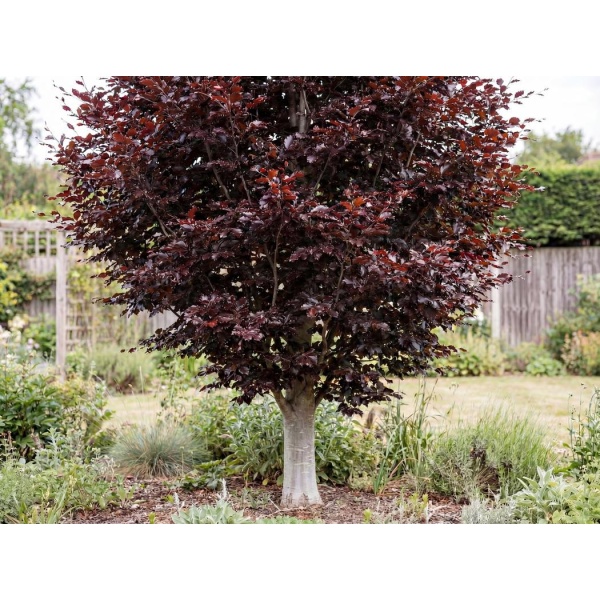
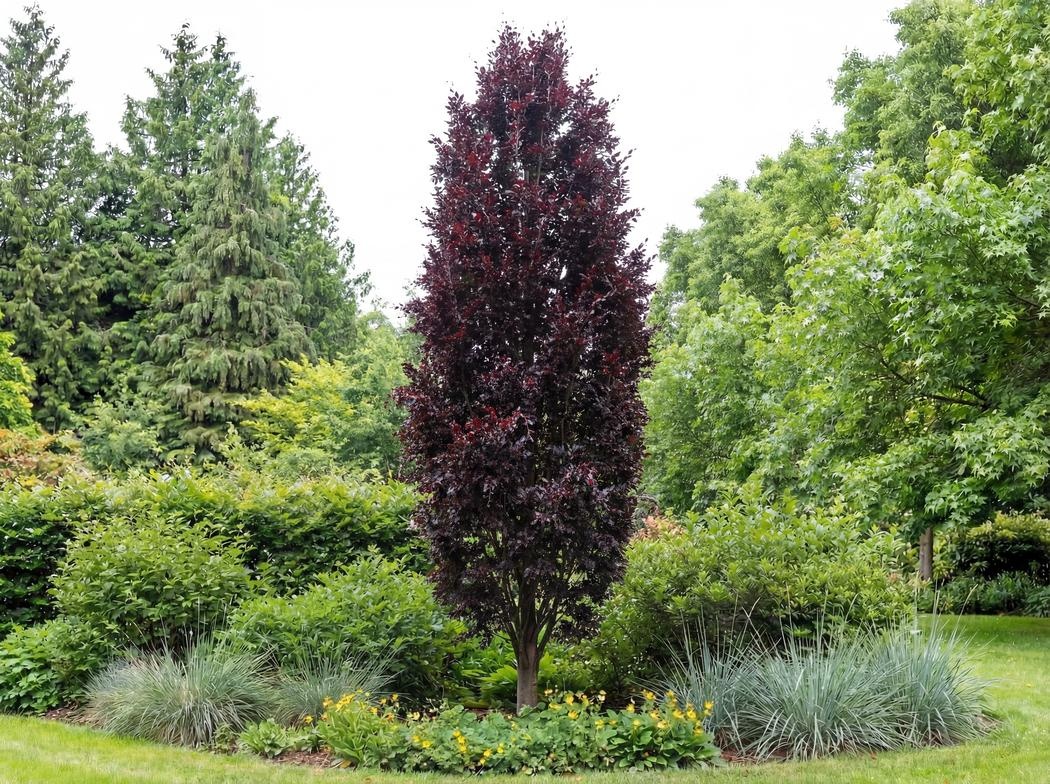
Fagus sylvatica ‘Dawyck Purple’
$579.99
Fagus sylvatica Dawyck Purple forms a narrow column of deep purple foliage, creating a strong vertical accent or screen where a broad tree would take too much room.
- Description
- Additional information
Description
Fagus sylvatica Dawyck Purple forms a tall, narrow column of deep purple foliage for formal gardens, entrances, and screening plantings. New leaves emerge golden bronze before deepening to purple, then turn reddish purple in fall.
Plant in full sun or partial shade in moist but well-drained soil; full sun develops the strongest foliage color. Water regularly through the first growing season and mulch with well-rotted compost or manure.
The beechnuts are edible when properly cooked, but raw or unripe nuts are toxic if eaten in large amounts. Keep fallen nuts away from children and dogs.
Additional information
| Height | 49 ft – 66 ft |
|---|---|
| Spread | 13 ft – 26 ft |
| Flowering months | April, May |
| Synonyms | Fagus sylvatica 'Dawyck Purple', Fagus sylvatica Purpurea Fastigiata, Fagus sylvatica. 'Dawyck Purple' |
| Family | Fagaceae |
| Hazardous | yes |
| Variegated | unknown |
| Color flower spring | Green |
| Aspect | East, South, West, North |
| Foliage | Deciduous |
| Habit | Columnar upright |
| Moisture | Moist but Well Drained, Well Drained Soil |
| Ph | Acid, Alkaline, Neutral |
| Position | Full sun, Partial shade |
| Shape | Column |
| Suggest planting location | Urban and courtyard gardens, Architectural planting, Hedges and screening plants, Cottage and informal gardens, Wildlife friendly gardens |
| Type | Tree |
| Use for | Architectural, Screen, Foundation Planting |
| Years to max height | 20 |
| Soil | Chalk, Clay, Loam, Sand |
| Local names | Dawyck Purple Beech, European Beech |
| Blomidon Item No | MO23003753, FAGSYDP00015G, FAGSYDP50MMWB, 202066356, 201812587, 201967082 |
| Usps | Deep purple foliage creates a bold vertical accent., Its narrow columnar habit suits confined garden spaces., Grow in full sun or partial shade with moist, well-drained soil. |
| Propagation | Propagate by grafting. |
| Pests | Aphids and beech bark scale may occur. |
| Diseases | Beech bark disease, bracket fungi, powdery mildew, and honey fungus may occur. |
| Pruning | Remove wayward or crossing branches while the tree is dormant in late winter or early spring. |
| Hazardous information | Raw or unripe beechnuts are toxic if eaten in large amounts. Keep fallen nuts away from children and dogs. |
| Watering instructions | Water regularly through the first growing season; avoid waterlogged soil. |
| Sunlight instructions | Grow in full sun for the richest foliage color or in partial shade. |
| Common Name | Dawyck Purple Beech |