
Hydrangea paniculata ‘Limelight’
$74.99
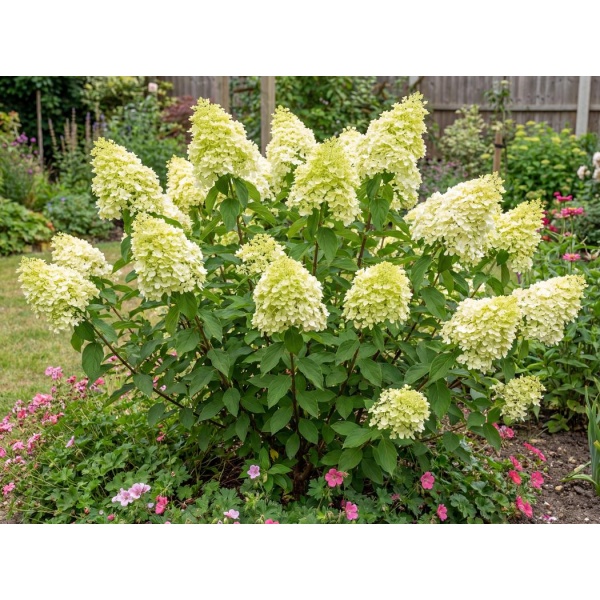
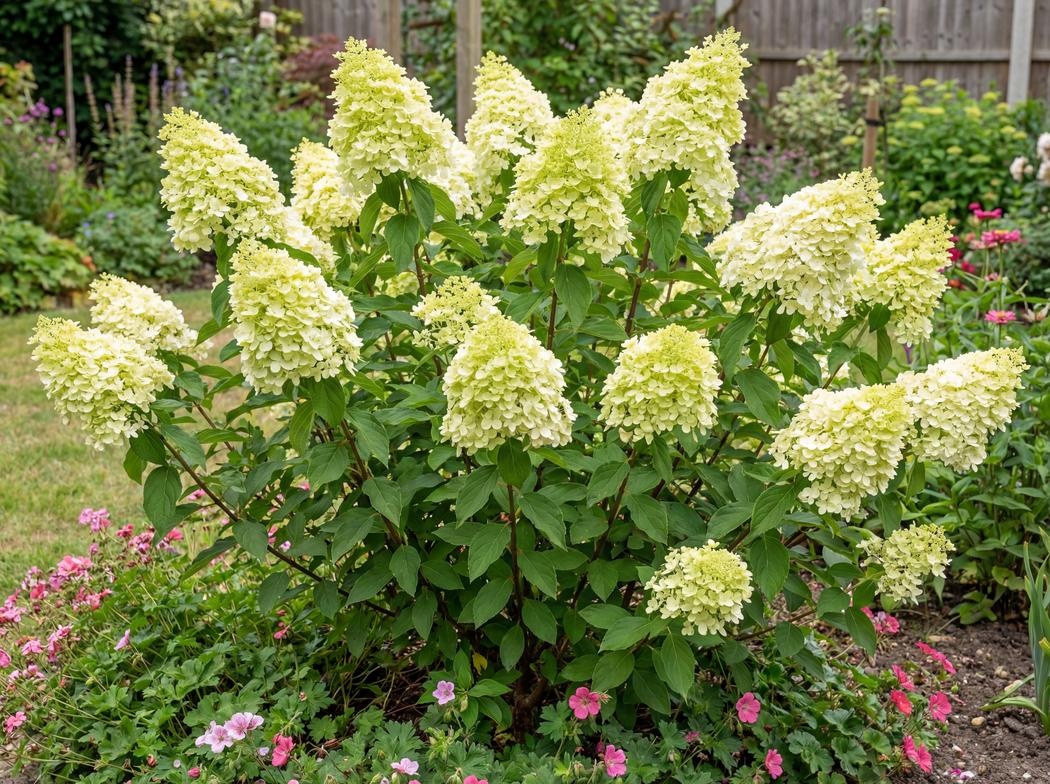
Hydrangea paniculata Limelight builds a full-size upright border shrub, with pale lime-green summer panicles that turn creamy white and mature pink-green.
- Description
- Additional information
Description
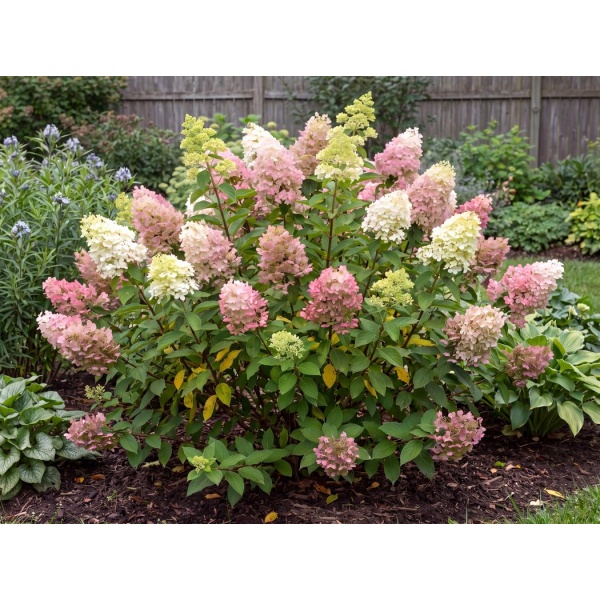
Hydrangea paniculata Limelight builds a large upright rounded shrub for a broad border, hedge, or specimen planting. Its dense cone-shaped panicles open pale lime green, turn creamy white, and mature with a deeper pink flush mixed with green.
Strong upright stems carry flowers for fresh bouquets or dried arrangements. Give the shrub moist but well-drained soil in full sun or partial shade, and allow room for its mature spread.
It can cause a skin allergy and is harmful if eaten by dogs and cats; it is also listed as a problem for horses.
Additional information
| Height | 5 ft – 8 ft |
|---|---|
| Spread | 5 ft – 8 ft |
| Flowering months | July, August, September, October |
| Synonyms | Hydrangea pan Limelight, Hydrangea paniculata 'Limelight', Hydrangea paniculata 'Limelight' PBR, Hydrangea paniculata Zwijnenburg |
| Family | Hydrangeaceae |
| Hazardous | yes |
| Variegated | unknown |
| Color flower autumn | Green, Pink |
| Color flower summer | Green, White, Pink, Cream |
| Aspect | East, South, West, North |
| Foliage | Deciduous |
| Habit | Bushy |
| Moisture | Moist but Well Drained, Well Drained Soil |
| Ph | Acid, Alkaline, Neutral |
| Position | Full sun, Partial shade |
| Shape | Round, Upright |
| Suggest planting location | Low maintenance planting, Urban and courtyard gardens, Flowering borders, Coastal conditions, Cottage and informal gardens |
| Type | Shrub |
| Use for | Hedge, Cutting Garden, Low maintenance |
| Years to max height | 5 |
| Drought resistance | moderate |
| Soil | Clay, Loam, Sand |
| Local names | Limelight Hydrangea |
| Usps | Pale lime panicles mature through creamy white to pink-green., Strong stems support flowers for cutting and drying., Give full sun or partial shade with moist, well-drained soil. |
| Propagation | Propagate by softwood cuttings in early summer or hardwood cuttings in winter. |
| Pests | Aphids, capsid bugs, hydrangea scale, and vine weevils may occur. |
| Diseases | Leaf spot, powdery mildew, gray mold, and honey fungus may occur. |
| Pruning | Prune the stems in late winter or spring. |
| Hazardous information | It can cause a skin allergy and is harmful if eaten by dogs and cats; it is also listed as a problem for horses. |
| Watering instructions | Keep the soil moist but well drained, especially in full sun. |
| Sunlight instructions | Grow in full sun or partial shade on any listed aspect. |