
Hemerocallis ‘Catherine Woodbury’
$28.99
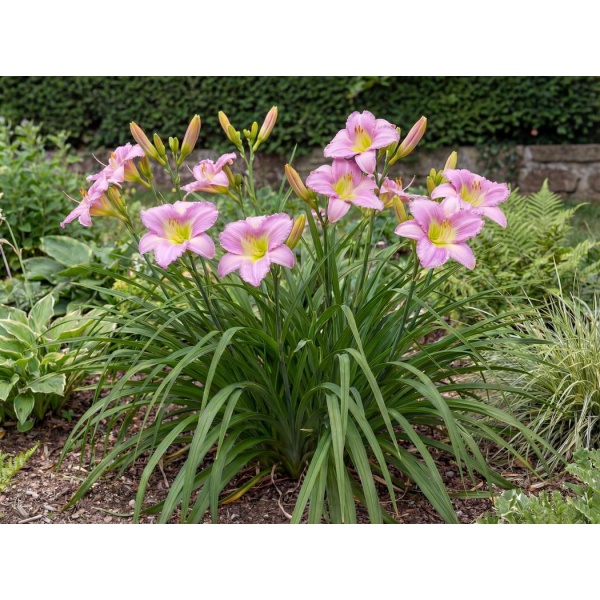
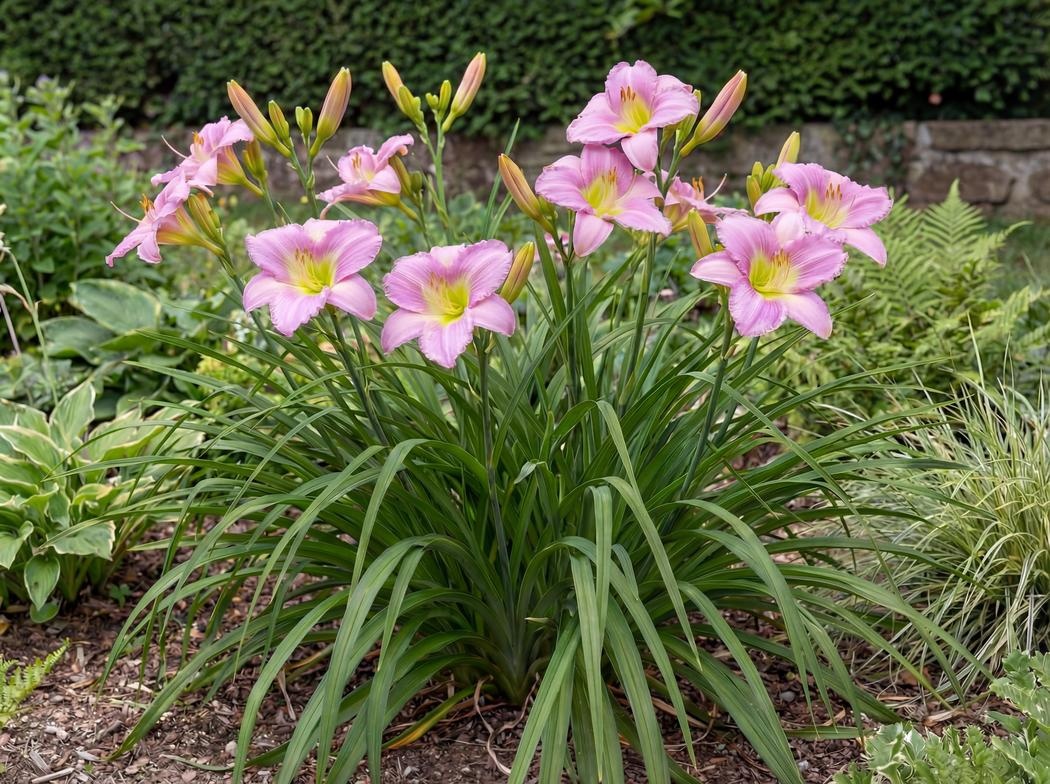
Hemerocallis Catherine Woodbery bears fragrant orchid-pink flowers with broad green throats above arching foliage.
- Description
- Additional information
Description
Hemerocallis Catherine Woodbery combines large, fragrant orchid-pink flowers with a fresh green throat. Each funnel-shaped bloom lasts for a day, while successive buds maintain the midsummer display above the foliage.
Narrow green leaves arch outward to form a durable clump beneath upright flowering stems. The gentle flower color works especially well in cottage borders, courtyard beds and coastal planting, and the stems can also be cut for arrangements.
This accepted classic cultivar offers long-lived structure and a distinctive scented bloom. Flowers and other plant parts are toxic to cats, so keep the plant away from pets.
Additional information
| Height | 2 ft – 2 ft |
|---|---|
| Spread | 5 in – 2 ft |
| Flowering months | July, August |
| Synonyms | Hemerocallis 'Catherine Woodbury', Hemerocallis Catherine Woodbury |
| Family | Asphodelaceae |
| Hazardous | yes |
| Variegated | no |
| Color flower summer | Green, Pink |
| Aspect | South, West |
| Foliage | Deciduous |
| Habit | Clump-former |
| Moisture | Moist but Well Drained |
| Ph | Acid, Alkaline, Neutral |
| Position | Full sun |
| Scent | Fragrant |
| Shape | Arching |
| Suggest planting location | Urban and courtyard gardens, Flowering borders, Coastal conditions, Cottage and informal gardens |
| Type | Perennial |
| Use for | Cutting Garden |
| Years to max height | 2 |
| Drought resistance | moderate |
| Soil | Chalk, Clay, Loam, Sand |
| Local names | Catherine Woodbery Daylily |
| Blomidon Item No | 7937666383923, ZHEMCW0001G, 201813194, 201850728 |
| Usps | Fragrant orchid-pink flowers open to broad green throats., Arching foliage frames large flowers in a long summer succession., Full sun and evenly moist, well-drained soil support prolific bloom. |
| Propagation | Propagate by division in early spring or early autumn. |
| Pests | The plant may be susceptible to aphids, slugs, snails, hemerocallis gall midge, red spider mites, and thrips. |
| Diseases | The plant may be susceptible to fungal leaf spot, rust, and bacterial leaf and stem rot. |
| Pruning | Cut back flower stems after blooming and remove dead foliage as required. |
| Hazardous information | Flowers and other plant parts are toxic to cats; keep the plant away from pets. |
| Watering instructions | Keep the soil evenly moist but well drained during active growth. |
| Sunlight instructions | Plant in full sun for the most prolific flowering. |