
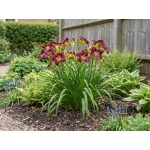
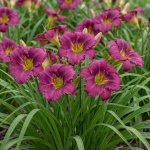
Hemerocallis ‘Purple de Oro’
$28.99
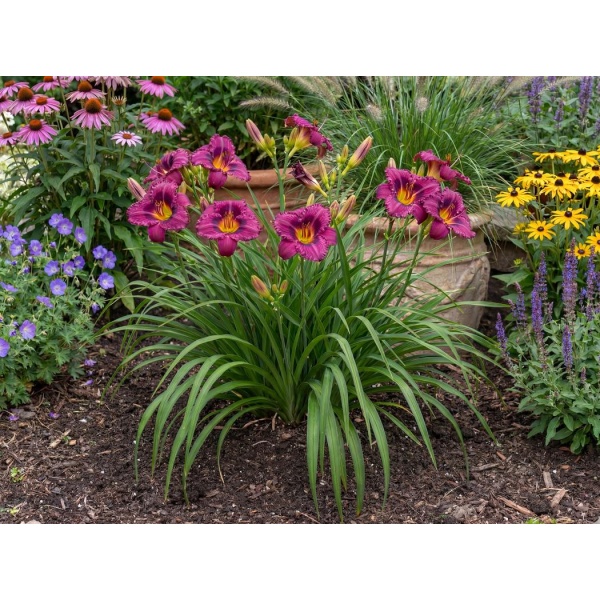
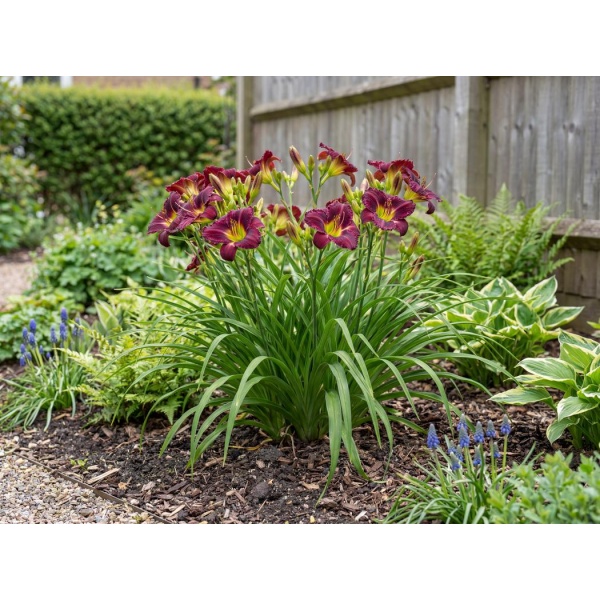
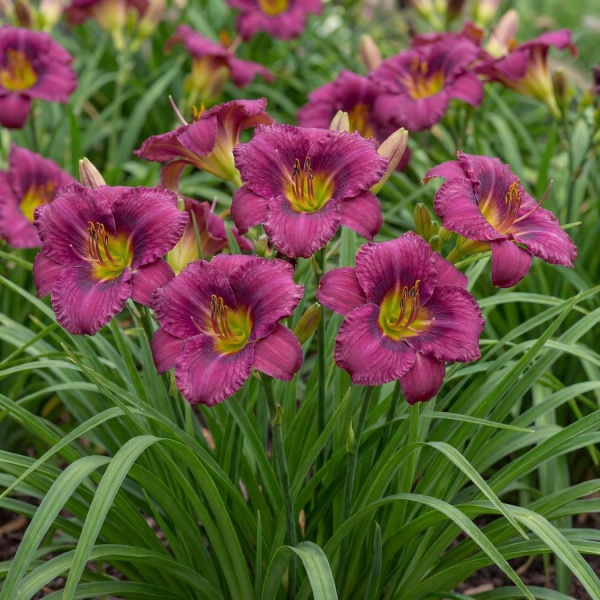
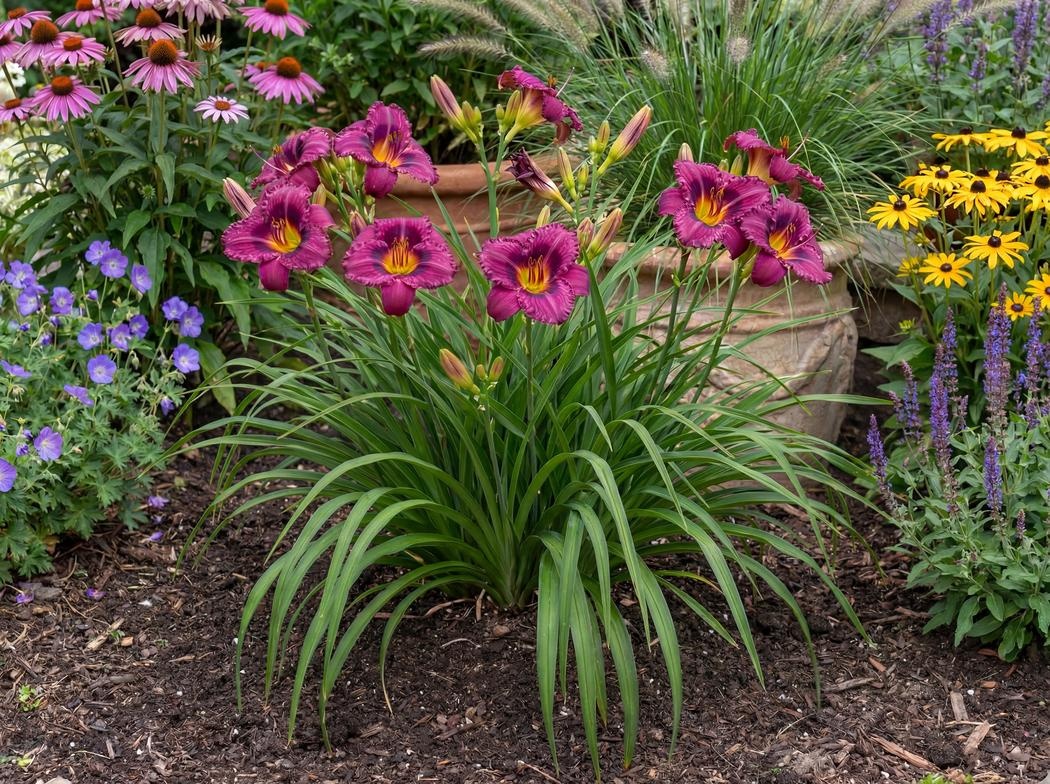
A compact reblooming daylily with arching green foliage and purple single flowers highlighted by lighter edges and gold throats.
- Description
- Additional information
Description
Hemerocallis Purple de Oro forms compact, arching clumps of green, blade-like foliage beneath purple flowers with lighter midribs, ruffled edges, and gold throats. Individual blooms open for about a day, while new buds extend the display from early summer into early fall.
This hardy perennial suits sunny or partly shaded borders, garden edging, mass plantings, and outdoor containers. Its repeat flowers attract butterflies, hummingbirds, and bees, and established plants tolerate dry periods.
Grow it in well-drained clay, loam, or sandy soil. Water during dry spells, remove spent flower stalks after flowering, and clear old foliage in late fall. The plant is toxic to cats if eaten, so keep it out of their reach.
Additional information
| Height | 1 ft – 2 ft |
|---|---|
| Spread | 1 ft – 2 ft |
| Flowering months | June, July, August, September |
| Synonyms | Hemerocallis 'Purple de Oro', Hemerocallis Purple D'Oro, Hemerocallis Purple dOro, Hemerocallis Razzmatazz |
| Family | Asphodelaceae |
| Hazardous | yes |
| Variegated | unknown |
| Color flower autumn | Purple, Yellow |
| Color flower summer | Purple, Yellow |
| Aspect | East, South, West |
| Foliage | Deciduous |
| Habit | Clump-former, Compact |
| Moisture | Moist but Well Drained |
| Ph | Acid, Alkaline, Neutral |
| Position | Full sun, Partial shade |
| Scent | Fragrant |
| Shape | Mound-forming, Arching |
| Suggest planting location | Butterfly Garden, Flowering borders, Patio and container use, Garden edging and borders |
| Type | Perennial |
| Use for | Low maintenance, Pollinator-Friendly, Container Planting |
| Drought resistance | yes |
| Soil | Clay, Loam, Sand |
| Local names | Daylily |
| Blomidon Item No | 7937666940979, ZHEMPD0001G, 1006141 |
| Cultivation | In USDA zone 6, set the crown just below the soil surface in full sun or partial shade and well-drained clay, loam, or sand. Remove spent flower stalks after flowering. |
| Propagation | Divide established clumps in spring or fall. |
| Pests | No serious pest problems; mites, aphids, and thrips may occur. |
| Diseases | No serious disease problems; watch for daylily rust. |
| Pruning | Remove spent flower stalks after flowering and clear old foliage in late fall. |
| Hazardous information | Toxic to cats if eaten; keep the plant out of their reach. |
| Watering instructions | Use well-drained soil, water regularly while establishing, and water deeply during dry spells. |
| Sunlight instructions | Plant in full sun for strongest flowering; partial shade is also suitable. |