
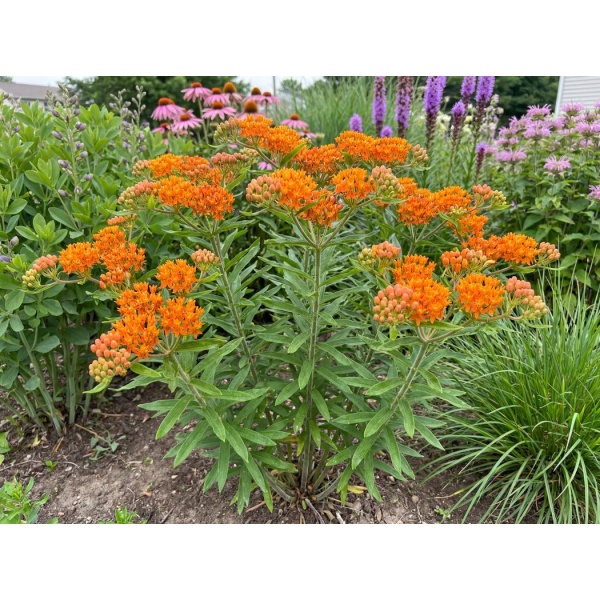
Asclepias tuberosa
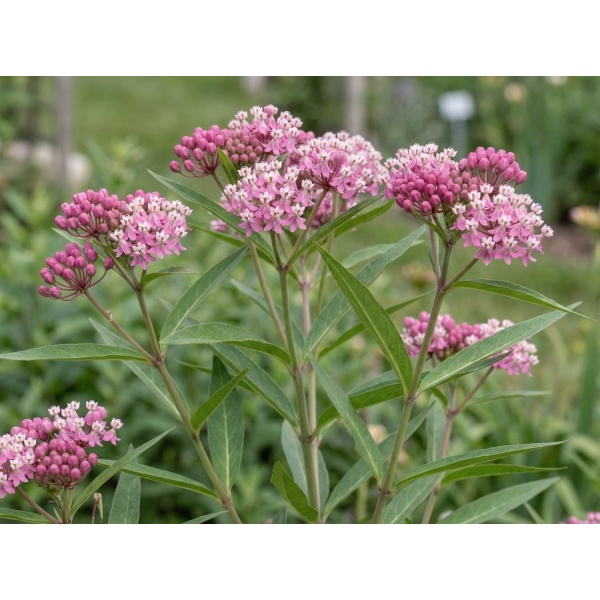
$28.99
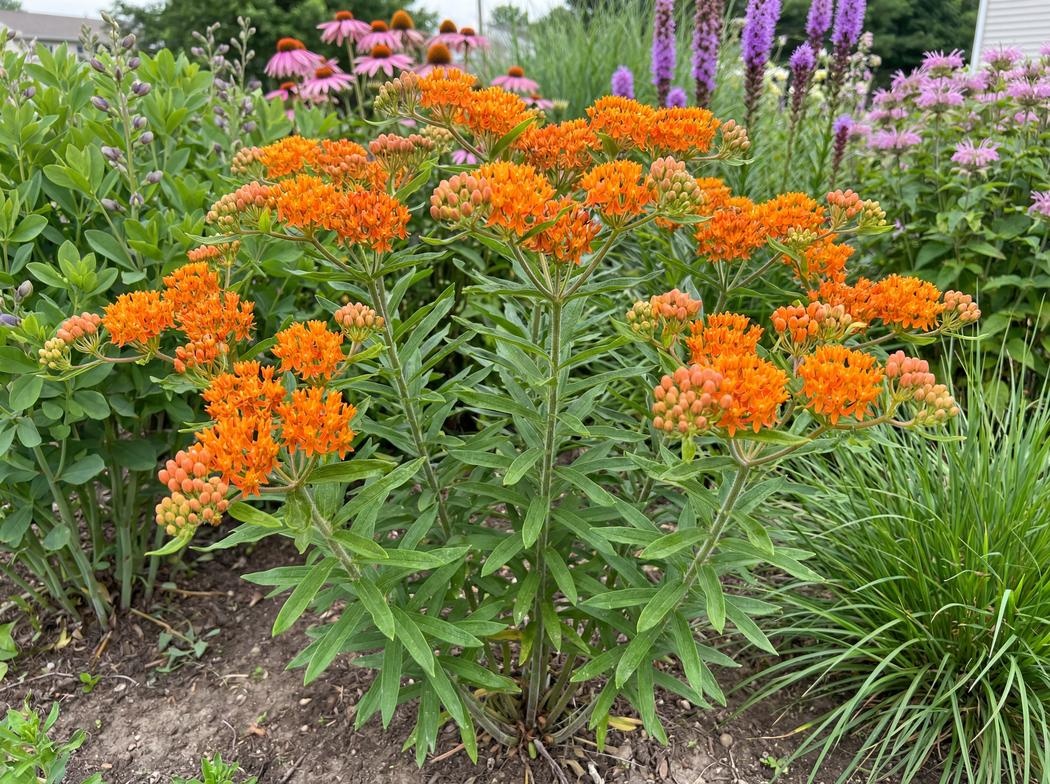
Asclepias tuberosa brings bright orange, yellow, or red flower clusters to sunny borders while supporting butterflies, bees, and other pollinators.
- Description
- Additional information
Description
Bright orange, yellow, or red flower clusters rise over bushy green foliage from late spring into summer. Asclepias tuberosa forms an upright herbaceous clump for sunny borders, prairie plantings, wildflower meadows, and pollinator gardens.
Plant it in full sun or partial shade in well-drained clay, loam, or sand. Established plants tolerate dry conditions, and the flowers supply nectar while the foliage supports monarch caterpillars.
The plant is toxic if eaten by people and pets, and its sap may irritate skin. Wear gloves when handling it.
Additional information
| Height | 50 cm – 100 cm |
|---|---|
| Spread | 10 cm – 50 cm |
| Flowering months | May, June, July, August |
| Family | Apocynaceae |
| Propagation | Sow seeds, or plant vertical root cuttings in fall. |
| Pests | Aphids may affect the plant. |
| Diseases | Minor leaf spots, rust, and cucumber mosaic virus may occur. |
| Hazardous information | The plant is toxic if eaten by people and pets, and its sap may irritate skin. Wear gloves when handling it. |
| Hazardous | yes |
| Variegated | unknown |
| Watering instructions | Keep the soil moist but well drained; avoid standing water. |
| Sunlight instructions | Grow in full sun or partial shade. |
| Color flower autumn | Red, Yellow, Orange |
| Color flower spring | Red, Yellow, Orange |
| Color flower summer | Red, Yellow, Orange |
| Aspect | South, West |
| Foliage | Deciduous |
| Habit | Bushy, Clump-former |
| Moisture | Moist but Well Drained, Well Drained Soil |
| Ph | Acid, Alkaline |
| Position | Full sun, Partial shade |
| Shape | Upright |
| Suggest planting location | Pollinator Garden, Butterfly Garden, Flowering borders, Wildflower meadows, Prairie style planting |
| Type | Perennial |
| Use for | Deer resistant, Butterfly-Friendly, Pollinator-Friendly |
| Years to max height | 2 |
| Drought resistance | yes |
| Cultivation | Plant in full sun or partial shade in well-drained clay, loam, or sand. Space plants 45 cm apart and avoid disturbing established taproots. |
| Soil | Clay, Loam, Sand |
| Local names | Butterfly Flower, Butterfly Milkweed, Butterfly Weed, Chiggerflower, Common Butterfly-weed, Indian Paintbrush, Milkweed, Pleurisy, Pleurisy Root, Tuber Root |
| Blomidon Item No | MO23015553, ZASCTU0001G |
| Usps | Bright orange, yellow, or red flowers form clustered displays., Established plants tolerate drought and resist deer damage. |
| Common Name | Butterfly Weed |